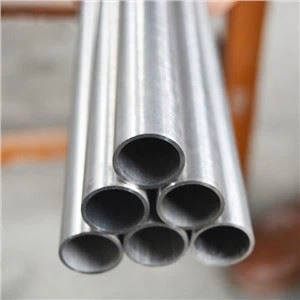
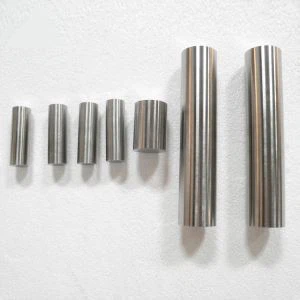
When it comes to engineering and material science, understanding the mechanical properties of materials is crucial. One material that has gained significant attention in various industries is titanium, and in this blog, we'll focus on the Poisson's ratio of a titanium bar. As a trusted titanium bar supplier, we aim to provide you with in - depth knowledge to help you make informed decisions for your projects.
Understanding Poisson's Ratio
Before delving into the Poisson's ratio of a titanium bar, let's first understand what Poisson's ratio is. Poisson's ratio, denoted by the Greek letter ν (nu), is a measure of the transverse contraction strain to the longitudinal extension strain in the direction of the stretching force. When a material is stretched in one direction, it tends to contract in the directions perpendicular to the applied force. Poisson's ratio quantifies this relationship.
Mathematically, if a material is subjected to a longitudinal stress (σ_{long}) and the resulting longitudinal strain is (ε_{long}), and the transverse strain is (ε_{trans}), then Poisson's ratio (ν=-\frac{ε_{trans}}{ε_{long}}). The negative sign is used because the transverse strain is in the opposite sense to the longitudinal strain; when the material is stretched (positive longitudinal strain), it contracts in the transverse direction (negative transverse strain).


Poisson's Ratio of Titanium Bars
The Poisson's ratio of titanium and its alloys typically ranges from 0.32 to 0.34. This value is relatively consistent across different types of titanium bars, whether they are for industrial applications or more specialized uses.
The reason for this relatively narrow range lies in the crystal structure of titanium. Most commercially available titanium alloys have a hexagonal close - packed (HCP) or body - centered cubic (BCC) crystal structure. These structures provide a certain degree of internal resistance and deformation behavior that result in the characteristic Poisson's ratio values.
Different titanium alloys may have slightly different Poisson's ratios due to the presence of alloying elements. For example, some titanium alloys may contain elements like aluminum, vanadium, or molybdenum, which can alter the atomic bonding and packing density, thereby affecting the material's deformation response. However, the changes are usually within the 0.32 - 0.34 range.
Importance of Poisson's Ratio in Engineering Applications
In engineering, the Poisson's ratio of a titanium bar is of great significance:
Structural Design
When designing structures using titanium bars, engineers need to know the Poisson's ratio to accurately predict how the bars will deform under load. For instance, in the construction of aerospace components or high - performance automotive parts, precise deformation calculations are essential to ensure the safety and functionality of the structure. Incorrectly assuming the Poisson's ratio could lead to over - or under - engineered designs, resulting in either excessive weight or insufficient strength.
Material Selection
Poisson's ratio can also play a role in material selection. If a project requires a material that can withstand large amounts of stretching with minimal transverse contraction, titanium bars with their known Poisson's ratio can be a good choice. This property is particularly important in applications where dimensional stability in multiple directions is critical, such as in the manufacturing of precision instruments.
Finite Element Analysis (FEA)
FEA is a widely used numerical method for simulating the behavior of materials under different loading conditions. To obtain accurate simulation results, the correct Poisson's ratio value must be input into the FEA software. For titanium bars used in simulations, using the appropriate 0.32 - 0.34 range ensures that the predicted deformation and stress distribution match the real - world behavior of the material.
Our Titanium Bar Offerings
As a leading titanium bar supplier, we offer a wide range of products to meet diverse customer needs.
Our Solid Titanium Bar Rod is known for its high strength and excellent corrosion resistance. These bars are available in various diameters and lengths, making them suitable for a wide array of applications, from the aerospace industry to marine engineering.
For more specialized applications, our TC 18 BT 22 Titanium Rod is an excellent choice. This alloy offers enhanced mechanical properties, including high strength and good weldability. It is commonly used in the production of aircraft structural parts and high - stress components.
Our Titanium Industrial Bar is designed for general industrial applications. It provides a cost - effective solution while still maintaining the high - quality characteristics of titanium, such as corrosion resistance and good formability.
Bootom Line
In conclusion, understanding the Poisson's ratio of a titanium bar is essential for engineers, designers, and anyone involved in projects that use titanium materials. The typical Poisson's ratio range of 0.32 - 0.34 for titanium bars provides valuable information for accurate deformation prediction, material selection, and simulation.
As your reliable titanium bar supplier, we are committed to providing high - quality products and in - depth technical support. Whether you need a small quantity of titanium bars for a research project or a large - scale supply for an industrial application, we can meet your needs.
If you are interested in purchasing our titanium bars or have any questions about their properties, applications, or specifications, please don't hesitate to reach out. We are here to start a productive discussion and assist you in finding the best titanium bar solutions for your projects.
References
Callister, W. D., & Rethwisch, D. G. (2017). Materials Science and Engineering: An Introduction. Wiley.
ASM Handbook Committee. (2019). ASM Handbook, Volume 2: Properties and Selection: Nonferrous Alloys and Special - Purpose Materials. ASM International.