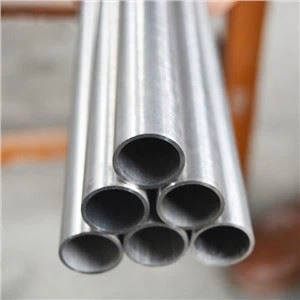
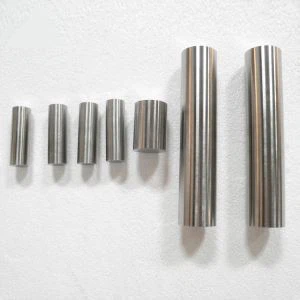
Hey there! As a supplier of Gr5 Titanium Plate, I often get asked about the heat treatment processes suitable for this amazing material. So, I thought I'd put together this blog to share some insights on that.
First off, let's talk a bit about Gr5 Titanium Plate. It's also known as Ti-6Al-4V, which is a titanium alloy that's super popular in a bunch of industries. It's got high strength, good corrosion resistance, and it's lightweight too. That's why you'll find it in aerospace, medical, and even some sports equipment.
Now, onto the heat treatment processes.
Annealing
Annealing is one of the most common heat treatment processes for Gr5 Titanium Plate. The main goal of annealing is to relieve internal stresses that might have built up during manufacturing processes like rolling or forging. It also helps to improve the ductility of the material, making it easier to work with.
There are different types of annealing for Gr5 Titanium Plate. Full annealing involves heating the plate to a temperature between 700 - 800°C (1292 - 1472°F) and then slowly cooling it down. This process results in a more uniform microstructure and better mechanical properties. Stress relief annealing, on the other hand, is done at a lower temperature, usually around 550 - 650°C (1022 - 1202°F). It's mainly used to reduce internal stresses without significantly changing the microstructure.
Annealing is great because it can make the Gr5 Titanium Plate more stable and reliable. For example, in aerospace applications, where parts need to withstand high stresses and harsh environments, annealed Gr5 Titanium Plate can perform much better.
Solution Treatment and Aging
Solution treatment and aging is another important heat treatment process for Gr5 Titanium Plate. Solution treatment starts by heating the plate to a high temperature, typically around 950 - 1000°C (1742 - 1832°F). At this temperature, the alloying elements like aluminum and vanadium dissolve into the titanium matrix.
After solution treatment, the plate is rapidly quenched, usually in water or oil. This "freezes" the dissolved elements in the matrix, creating a supersaturated solid solution. Then comes the aging process. The plate is heated to a lower temperature, around 450 - 600°C (842 - 1112°F), and held there for a certain period of time. During aging, the dissolved elements start to precipitate out of the matrix, forming fine particles. These particles strengthen the material, increasing its hardness and strength.
This process is often used in applications where high strength is required, such as in aircraft components or high-performance sports equipment. The combination of solution treatment and aging can significantly improve the mechanical properties of Gr5 Titanium Plate.
Beta Annealing
Beta annealing is a bit different from the other processes. In beta annealing, the Gr5 Titanium Plate is heated above the beta transus temperature, which is around 995 - 1005°C (1823 - 1841°F) for this alloy. At this temperature, the titanium has a beta phase structure.
After heating, the plate is cooled at a controlled rate. Beta annealing can result in a coarse-grained microstructure, which gives the material high fracture toughness. This makes it suitable for applications where crack propagation resistance is important, like in some military and aerospace components.
Comparison of Heat Treatment Processes
Each heat treatment process has its own advantages and disadvantages. Annealing is great for stress relief and improving ductility, but it might not provide the highest strength. Solution treatment and aging can significantly increase the strength, but it requires more complex processing steps. Beta annealing offers high fracture toughness but might sacrifice some other properties like ductility.
When choosing the right heat treatment process for Gr5 Titanium Plate, it's important to consider the specific requirements of the application. For example, if you're making a medical implant, you might prioritize biocompatibility and ductility, so annealing could be a good choice. If you're manufacturing an aircraft wing, high strength and fatigue resistance might be more important, so solution treatment and aging could be the way to go.
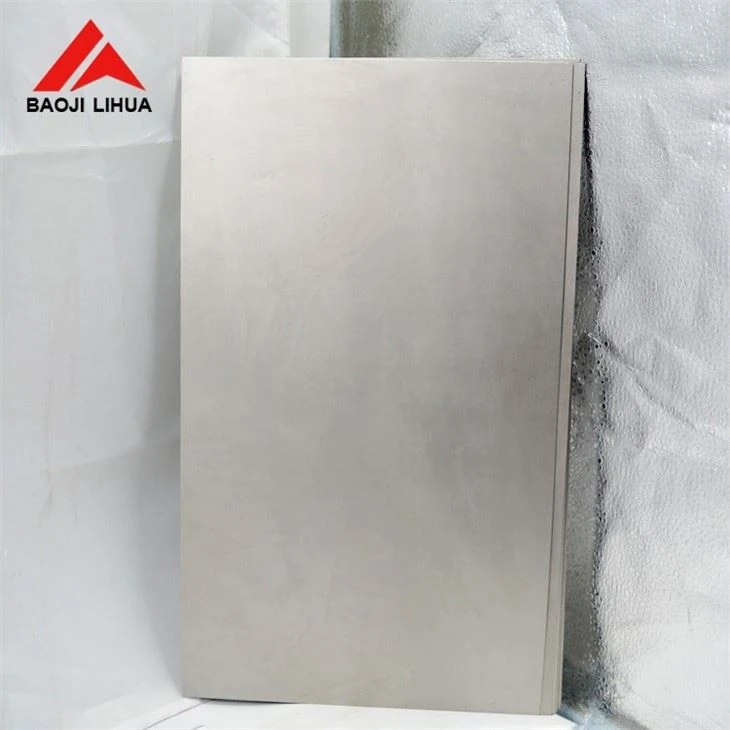

Other Titanium Products We Offer
In addition to Gr5 Titanium Plate, we also supply other high - quality titanium products. Check out our Grade7 Titanium Plate Titanium Sheet, which has excellent corrosion resistance and is suitable for chemical processing industries. Our Grade 2 Titanium Foil Titanium Alloy Sheet is known for its good formability and is widely used in electronics and architecture. And don't forget our Gr12 Titanium Sheet, which combines good strength and corrosion resistance.
Contact Us for Procurement
If you're in the market for Gr5 Titanium Plate or any of our other titanium products, we'd love to hear from you. We can provide you with high - quality materials and offer advice on the best heat treatment processes for your specific needs. Whether you're a small business or a large corporation, we're committed to meeting your requirements. So, don't hesitate to reach out and start a procurement discussion with us.
References
- "Titanium: A Technical Guide" by John C. Williams
- "Metallurgy and Heat Treatment of Titanium Alloys" by Yuri V. Milman