


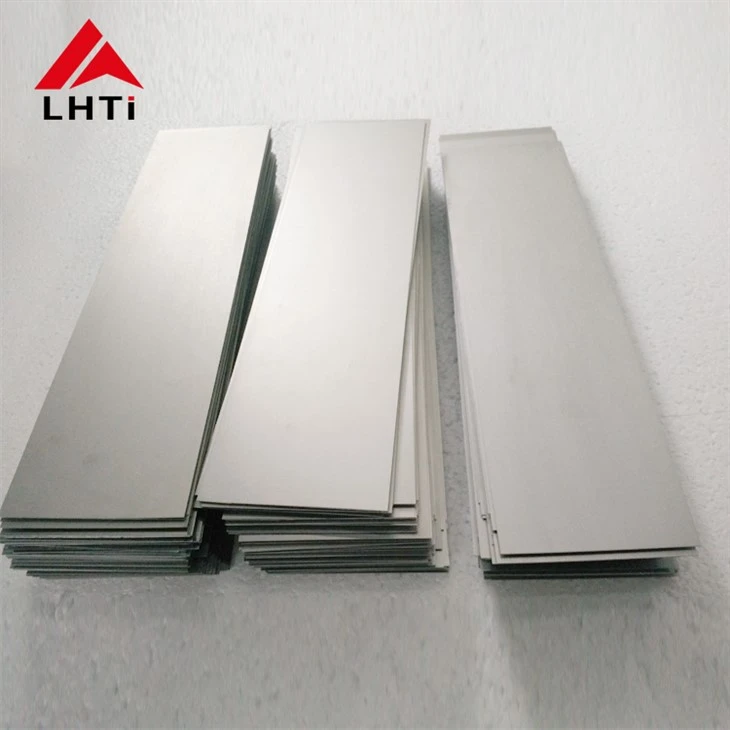


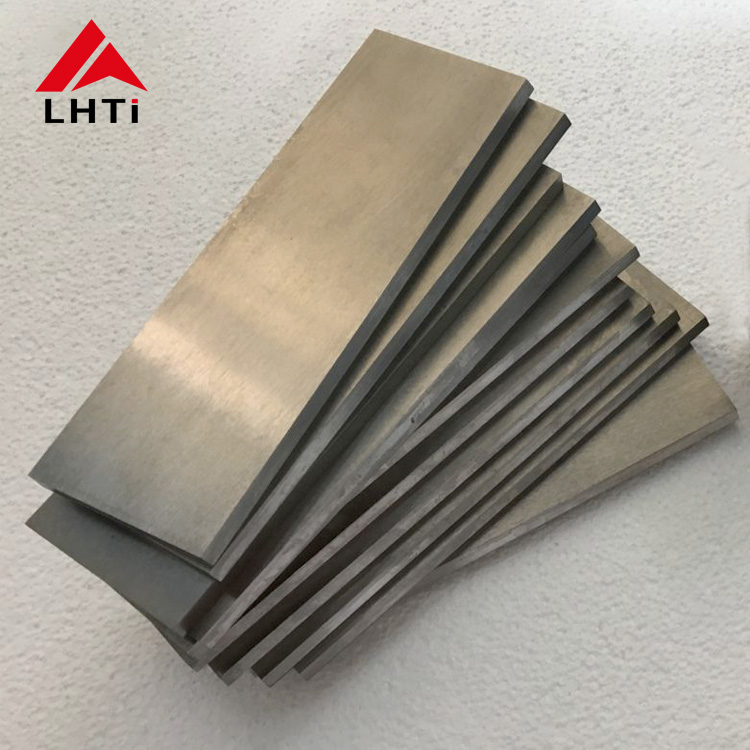
Grade 7 Titanium Plate The Palladium-Enhanced Solution
Standard: ASTM B265
Material: GR1, GR2, GR5, GR7, GR12
Unit Price: $15usd/kg-$48usd/kg
Thickness: 0.5-100mm
Length: 500-6000mm Or As You Require
Width: 500-1000mm Or As You Require
Surface: Pickling, Polishing, Sand Blasting
MOQ:50kgs
Factory Area:3000 ㎡
Company Staff:48
Foreign Trade Team Service Staff:20
China's Professional Titanium Plate Manufacturer
Grade 7 Titanium Plate/Sheet: The Palladium-Enhanced Solution
1. Core Identity: What Makes Grade 7 Unique?
Grade 7 titanium (UNS R52400) is a palladium-modified commercial pure titanium alloy designed for applications where superior corrosion resistance is non-negotiable. Unlike Grade 2 (unalloyed CP titanium), Grade 7 incorporates 0.12–0.25% palladium (Pd)-a noble metal that dramatically enhances the stability of titanium's passive oxide layer. This modification retains all the desirable properties of CP titanium (e.g., biocompatibility, formability) while unlocking unprecedented resistance to reducing acids, chlorides, and crevice corrosion.
Key Standards Compliance:
- ASTM B265 (Strip, Sheet, and Plate)
- AMS 4910 (Aerospace Applications)
- ISO 5832-2 (Implants)
2. Technical Superiority: Palladium's Impact on Performance
Grade 7's advantages stem from its controlled palladium addition, which transforms its corrosion behavior without compromising mechanical properties. Below is a comparison with Grade 2 (the most common CP titanium) to highlight its differentiation:
|
Property |
Grade 7 (Ti-0.2Pd) |
Grade 2 (CP Titanium) |
Advantage of Grade 7 |
|---|---|---|---|
|
Corrosion Resistance |
Excellent in reducing acids (e.g., HCl, H₂SO₄) and chlorides |
Good in mild environments; susceptible to pitting in strong acids |
Resists 10x longer in 10% HCl at 80°C |
|
Mechanical Strength |
Tensile strength ≥345 MPa; Elongation ≥20% |
Tensile strength ≥345 MPa; Elongation ≥20% |
Identical to Grade 2-no trade-off in strength |
|
Biocompatibility |
ISO 10993-certified (non-toxic, non-allergenic) |
ISO 10993-certified |
Suitable for medical implants (e.g., pacemakers) |
|
Formability |
Excellent (bendable, stampable) |
Excellent |
Compatible with complex fabrication processes |
Critical Note: Grade 7's corrosion resistance comes from palladium's ability to stabilize the TiO₂ passive layer-even in environments where Grade 2 would fail (e.g., concentrated hydrochloric acid, seawater with high chloride content).
3. Applications: Where Grade 7 Excels
Grade 7's unique combination of corrosion resistance and formability makes it the material of choice for high-stakes industries where equipment failure is not an option. Below are its most impactful applications:
3.1 Chemical Processing: Acid-Resistant Equipment
- Grade 7 plates/sheets are used to fabricate reactors, heat exchangers, and valves for processing aggressive chemicals (e.g., hydrochloric acid, nitric acid, chlorine). For example:
- A Zhejiang-based fine chemical enterprise reported 18 months of continuous operation for a Grade 7 reactor holding a 90°C hydrochloric acid-nitric acid mixture-with no signs of corrosion.
Why Grade 7? Grade 2 would corrode within 6–12 months in the same environment, leading to costly downtime and replacements.
3.2 Marine: Chloride-Resistant Components
Grade 7's resistance to chloride-induced pitting and crevice corrosion makes it ideal for offshore and marine applications:
- Offshore Oil & Gas: Pipelines, wellhead components, and seawater-cooled condensers.
- Shipbuilding: Hull plating, propeller shafts, and ballast tank linings.
- Desalination Plants: Reverse osmosis (RO) membrane housings and brine heaters.
3.3 Medical: Biocompatible Implants
While Grade 5 (Ti-6Al-4V) dominates orthopedic implants, Grade 7 is preferred for long-term implantable devices where corrosion resistance is critical:
- Pacemaker Housings: Resists bodily fluids (e.g., blood, interstitial fluid) without degradation.
- Dental Implants: Compatible with oral environments (e.g., saliva, acidic foods).
3.4 Aerospace: Corrosion-Resistant Fasteners
Grade 7 is used for aerospace fasteners (e.g., bolts, nuts) in environments where exposure to jet fuel, hydraulic fluids, and atmospheric corrosion is common. Its non-magnetic properties also make it suitable for MRI-compatible components.
4. Manufacturing & Quality Assurance
Grade 7 plates/sheets are produced via hot rolling (for thicknesses ≥6 mm) or cold rolling (for thinner gauges), followed by annealing to optimize formability. Key quality control measures include:
- Chemical Verification: Inductively Coupled Plasma (ICP) spectroscopy to ensure Pd content (0.12–0.25%) and impurity limits (e.g., Fe ≤0.30%, O ≤0.25%) comply with ASTM B265.
- Mechanical Testing: Tensile, yield, and elongation tests per ASTM E8 to confirm strength and ductility.
- Corrosion Testing: Immersion tests in 10% HCl at 80°C for 1000 hours to validate resistance.
- Surface Finish: Available in pickled (oxide-free, enhanced corrosion resistance) or polished (Ra ≤0.8 μm for medical/aesthetic applications).
5. Why Choose Grade 7 Over Alternatives?
Grade 7 fills a critical gap between commercial pure titanium (Grade 2) and high-strength alloys (Grade 5):
vs. Grade 2: Grade 7 offers 10–100x better corrosion resistance in reducing acids and chlorides-without sacrificing strength or formability.
vs. Grade 5: Grade 7 is more corrosion-resistant and easier to fabricate (no heat treatment required for welding).
vs. Hastelloy: Grade 7 is lighter (density: 4.51 g/cm³ vs. 8.89 g/cm³ for Hastelloy C-276) and more cost-effective for large-scale applications.
Grade 2 and Grade 7 Titanium Plate Titanium Sheet:
Hot Tags: Grade 7 Titanium Plate The Palladium-Enhanced Solution, China, manufacturers, suppliers, factory, customized, low price, in stock, made in China, alloy titanium grade 7 sheet, 50mm titanium plate, Titanium Materials, customized titanium plate, grade 23 titanium sheet, sheet of titanium
You Might Also Like


Send Inquiry