

Hey there! As a supplier of Gr5 Titanium Bar, I often get asked about the role of vanadium in this alloy. So, I thought I'd write this blog to share what I know.
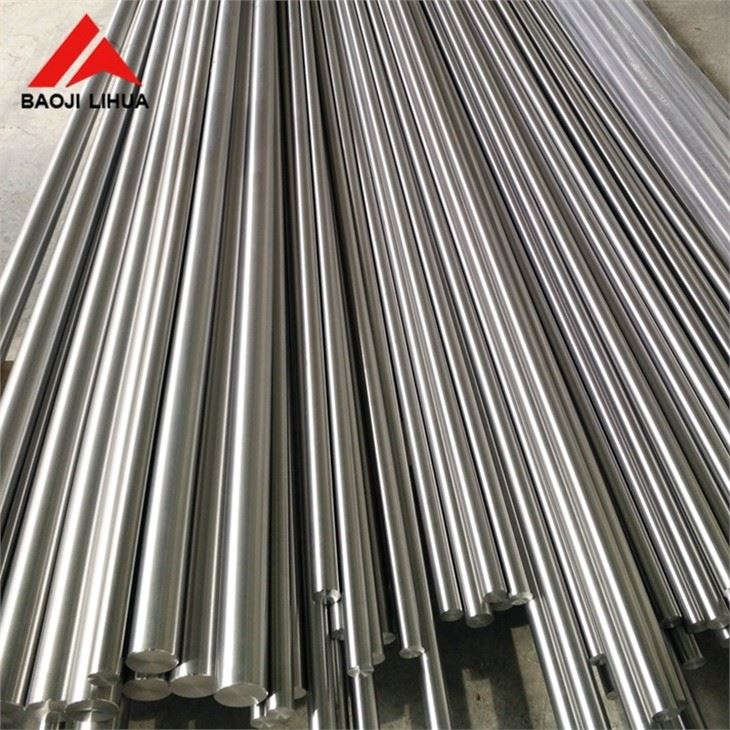

First off, let's talk a bit about Gr5 Titanium Bar. It's one of the most widely used titanium alloys out there. It's durable, corrosion - resistant, and has a great strength - to - weight ratio. That's why you can find it in a bunch of industries, from aerospace to medical. You can check out more on Medical Titanium Alloys Grade 5 Titanium Bar to see some of its medical applications.
Now, onto vanadium. Vanadium is a key alloying element in Gr5 Titanium Bar. In Gr5, which is also known as Ti - 6Al - 4V, vanadium makes up about 4% of the alloy composition.
One of the main roles of vanadium is to enhance the strength of the titanium bar. It does this by forming a solid - solution with titanium. When vanadium atoms are dissolved in the titanium lattice, they distort the lattice structure. This distortion makes it harder for dislocations (defects in the crystal structure) to move. Since the movement of dislocations is what causes a material to deform under stress, making it harder for them to move means the material can withstand more stress before it deforms. So, the overall strength of the Gr5 Titanium Bar is increased.
Another important role of vanadium is in improving the heat - treatability of the alloy. Heat treatment is a process where the material is heated to specific temperatures and then cooled at certain rates to change its properties. Vanadium helps in the precipitation of hardening phases during heat treatment. For example, when Gr5 Titanium Bar is solution - treated and aged, vanadium contributes to the formation of fine, hard particles in the titanium matrix. These particles further strengthen the alloy and improve its mechanical properties, like hardness and fatigue resistance.
Vanadium also plays a part in the alloy's corrosion resistance. Even though titanium itself is highly corrosion - resistant due to the formation of a passive oxide layer on its surface, vanadium can enhance this property. It helps in maintaining the integrity of the oxide layer, especially in harsh environments. This is crucial in applications where the Gr5 Titanium Bar is exposed to corrosive substances, such as in chemical processing plants or marine environments.
In the aerospace industry, the strength and light - weight properties provided by vanadium in Gr5 Titanium Bar are a game - changer. Aircraft components need to be strong enough to withstand the stresses of flight, but also light enough to keep the overall weight of the aircraft down. The use of Gr5 Titanium Bar with vanadium allows for the design of more efficient and high - performance aircraft. You can imagine that saving even a little bit of weight on each component can add up to significant fuel savings over the long - term.
In the medical field, the corrosion resistance and biocompatibility of Gr5 Titanium Bar are of utmost importance. Vanadium's role in enhancing these properties makes the alloy a great choice for medical implants. Whether it's a hip replacement or a dental implant, the Gr5 Titanium Bar with vanadium can provide a long - lasting and safe solution. You can explore more about other titanium alloy bars like TC 11 BT 9 Titanium Alloy Bar or TC 9 Titanium Bar which also have their unique applications.
Now, if you're in need of high - quality Gr5 Titanium Bar for your project, whether it's for aerospace, medical, or any other industry, don't hesitate to reach out for procurement discussions. We can talk about the specifications you need, the quantity, and the best way to get the material to you in a timely manner.
References
- "Titanium Alloys: Fundamentals and Applications" by David Eylon
- "Materials Science and Engineering: An Introduction" by William D. Callister Jr. and David G. Rethwisch



