Hey there! As a supplier of molybdenum bars, I often get asked all sorts of questions about these awesome materials. One question that pops up quite a bit is, "What is the Poisson's ratio of a molybdenum bar?" Well, let's dive right into it and break it down in a way that's easy to understand.
First off, what the heck is Poisson's ratio? In simple terms, it's a measure of how a material behaves when you apply force to it. When you stretch or compress a material, it doesn't just change in the direction of the force. It also changes in the perpendicular directions. Poisson's ratio is the ratio of the transverse strain (the change in the perpendicular direction) to the axial strain (the change in the direction of the applied force).
For a molybdenum bar, the Poisson's ratio is typically around 0.32. This value can vary a bit depending on factors like the purity of the molybdenum, the manufacturing process, and the temperature. But in general, 0.32 is a good ballpark figure.
Why does this matter? Well, understanding the Poisson's ratio of a molybdenum bar is crucial for a variety of applications. For example, in engineering and manufacturing, it helps in designing structures and components that can withstand different types of forces. If you're building a machine part out of molybdenum, you need to know how it will deform under stress. The Poisson's ratio gives you an idea of how the material will change shape in all directions, not just the direction of the applied force.
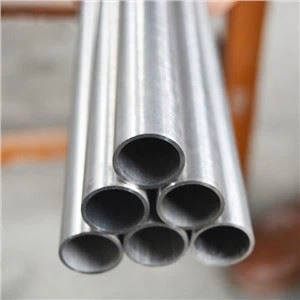
Let's say you're using a Molybdenum Rod in a high - stress application, like in a jet engine. The engine components are subjected to extreme forces during operation. Knowing the Poisson's ratio of the molybdenum rod helps engineers design the part so that it can handle these forces without failing. If they don't take the Poisson's ratio into account, the part might deform in unexpected ways, leading to premature wear and tear or even catastrophic failure.
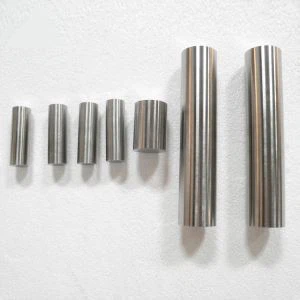
Similarly, if you're working with a Molybdenum Round Bar in a precision machining process, the Poisson's ratio affects how the bar will respond to cutting forces. Machinists need to adjust their cutting parameters based on this ratio to ensure accurate and high - quality machining.

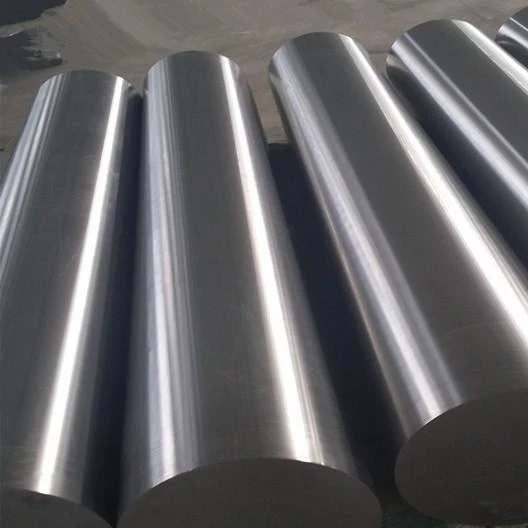
Now, let's talk a bit about the properties of molybdenum that contribute to its Poisson's ratio. Molybdenum is a refractory metal, which means it has a high melting point and excellent mechanical properties at high temperatures. Its crystal structure plays a big role in determining its Poisson's ratio. Molybdenum has a body - centered cubic (BCC) crystal structure. This structure gives it certain characteristics in terms of how the atoms are arranged and how they interact with each other when a force is applied.
In a BCC structure, the atoms are arranged in a way that allows for some degree of flexibility and deformation. When a force is applied, the atoms can move and re - arrange themselves to some extent, which results in the transverse and axial strains that we measure to calculate the Poisson's ratio. The relatively high value of 0.32 for molybdenum's Poisson's ratio indicates that it has a moderate ability to deform in the transverse direction when subjected to an axial force.
Another factor that can influence the Poisson's ratio of a molybdenum bar is its grain size. A finer grain size generally leads to more consistent mechanical properties, including a more stable Poisson's ratio. During the manufacturing process, techniques like hot rolling, forging, and annealing can be used to control the grain size of the molybdenum bar. This, in turn, helps in achieving the desired Poisson's ratio for specific applications.
Temperature also has an impact on the Poisson's ratio of molybdenum. As the temperature increases, the atomic vibrations in the molybdenum crystal structure become more intense. This can cause changes in the way the atoms interact with each other and, consequently, affect the Poisson's ratio. At very high temperatures, the Poisson's ratio of molybdenum may deviate from its room - temperature value. This is important to consider in applications where the molybdenum bar will be exposed to high - temperature environments, such as in furnaces or aerospace applications.
In addition to its Poisson's ratio, molybdenum bars have many other great properties that make them a popular choice in various industries. They have high strength, good corrosion resistance, and excellent thermal conductivity. These properties, combined with the knowledge of the Poisson's ratio, make molybdenum bars suitable for a wide range of applications, from electronics and aerospace to medical and chemical industries.
If you're in the market for molybdenum bars, whether it's a Molybdenum Rod or a Molybdenum Round Bar, you need to make sure you're getting a high - quality product. As a supplier, I take pride in offering molybdenum bars that meet the highest standards of quality. We use advanced manufacturing techniques to ensure that our molybdenum bars have consistent mechanical properties, including a well - defined Poisson's ratio.
When you're considering purchasing molybdenum bars, it's important to work with a reliable supplier. You want someone who can provide you with accurate information about the material properties, including the Poisson's ratio. We can also offer technical support and advice on how to use the molybdenum bars in your specific applications.
So, if you're interested in learning more about our molybdenum bars or have any questions about their Poisson's ratio or other properties, don't hesitate to reach out. We're here to help you make the right choice for your project. Whether you're a small - scale manufacturer or a large - scale industrial company, we can provide you with the molybdenum bars you need, tailored to your specific requirements.
In conclusion, the Poisson's ratio of a molybdenum bar is an important property that affects its performance in various applications. By understanding this ratio and how it's influenced by factors like crystal structure, grain size, and temperature, you can make better - informed decisions when using molybdenum bars in your projects. And if you're looking for high - quality molybdenum bars, we're the supplier you can trust.
References
- "Introduction to Materials Science for Engineers" by James F. Shackelford
- "Mechanical Behavior of Materials" by Norman E. Dowling