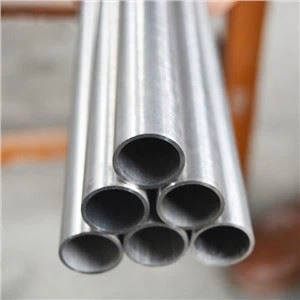
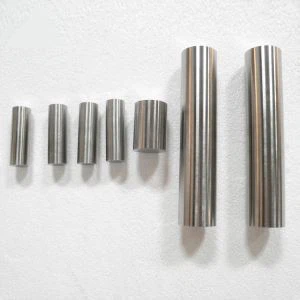
Hey there! As a supplier of titanium bars, I often get asked about the fatigue strength of these amazing materials. So, I thought I'd take the time to break it down for you in a way that's easy to understand.
First off, let's talk about what fatigue strength actually means. Fatigue strength refers to the maximum stress that a material can withstand for a specified number of cycles without failing. In simpler terms, it's how well a material can handle repeated stress over time. This is a crucial property, especially in applications where the titanium bar will be subjected to cyclic loading, like in aerospace, automotive, and medical industries.
Titanium is known for its excellent fatigue strength, and there are several reasons for this. One of the main factors is its unique microstructure. Titanium has a hexagonal close-packed (HCP) crystal structure, which gives it high strength and good ductility. This structure allows the material to deform and absorb energy under cyclic loading without cracking easily.
Another reason for titanium's high fatigue strength is its corrosion resistance. Corrosion can significantly reduce the fatigue life of a material by creating stress concentrations and promoting crack initiation. Since titanium forms a stable oxide layer on its surface, it's highly resistant to corrosion, which helps maintain its fatigue strength even in harsh environments.
Now, let's dive into some of the factors that can affect the fatigue strength of a titanium bar. The first one is the alloy composition. Different titanium alloys have different mechanical properties, and some are specifically designed to have higher fatigue strength. For example, the Ti-6Al-4V alloy is one of the most widely used titanium alloys due to its excellent combination of strength, ductility, and fatigue resistance. You can check out our Titanium Alloy Bar page to learn more about the different alloys we offer.
The manufacturing process also plays a crucial role in determining the fatigue strength of a titanium bar. Processes like forging, rolling, and heat treatment can significantly improve the material's microstructure and mechanical properties. For instance, proper heat treatment can relieve internal stresses and refine the grain structure, which in turn enhances the fatigue strength.
The surface finish of the titanium bar is another important factor. A smooth surface finish can reduce stress concentrations and prevent crack initiation, leading to higher fatigue strength. On the other hand, a rough or damaged surface can act as a stress raiser and decrease the fatigue life of the bar.
The size and shape of the titanium bar can also affect its fatigue strength. Generally, larger bars may have lower fatigue strength compared to smaller ones due to the presence of more defects and inhomogeneities. Similarly, bars with complex shapes or notches can experience higher stress concentrations, which can reduce their fatigue life.
In the medical industry, titanium bars are widely used for implants because of their biocompatibility and high fatigue strength. Our 6mm 12mm 20mm Alloy Titanium Rod Medical is specifically designed for medical applications, ensuring reliable performance under cyclic loading.


For applications that require a specific diameter, our Titanium Round Bar 25mm offers excellent fatigue strength and other mechanical properties. Whether you're in the aerospace, automotive, or medical field, we have the right titanium bar to meet your needs.
Measuring the fatigue strength of a titanium bar is typically done through fatigue testing. In this test, a specimen of the bar is subjected to cyclic loading at a specific stress level until it fails. The number of cycles to failure is then recorded, and this data is used to determine the fatigue strength of the material.
It's important to note that the fatigue strength of a titanium bar can vary depending on the testing conditions, such as the loading frequency, stress ratio, and environment. Therefore, it's crucial to perform fatigue testing under conditions that are representative of the actual application to get accurate results.
In conclusion, the fatigue strength of a titanium bar is a complex property that depends on several factors, including alloy composition, manufacturing process, surface finish, size, and shape. Titanium's unique combination of high strength, corrosion resistance, and good ductility makes it an excellent choice for applications that require high fatigue resistance.
If you're in the market for high-quality titanium bars with excellent fatigue strength, look no further. We're a trusted supplier of titanium bars, and we can provide you with the right product for your specific needs. Whether you have questions about our products or want to discuss a potential purchase, don't hesitate to reach out. Let's start a conversation and see how we can work together to meet your requirements.
References
- ASM Handbook, Volume 2: Properties and Selection: Nonferrous Alloys and Special-Purpose Materials.
- Callister, W. D., & Rethwisch, D. G. (2017). Materials Science and Engineering: An Introduction. Wiley.
- Ti-6Al-4V Titanium Alloy: Properties, Applications, and Processing. (n.d.). Retrieved from various industry publications.