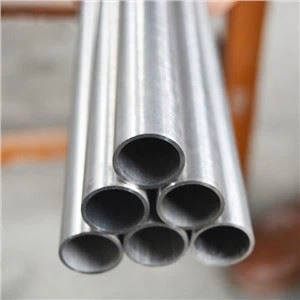
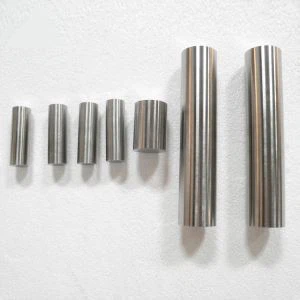
As a supplier of Niobium Tube, I often encounter inquiries about the fatigue life of niobium tubes. Fatigue life is a critical parameter, especially in applications where niobium tubes are subjected to cyclic loading. Understanding the fatigue life of niobium tubes can help engineers and designers make informed decisions when selecting materials for their projects.
Understanding Fatigue in Niobium Tubes
Fatigue is the process by which a material fails under repeated loading. When a niobium tube is exposed to cyclic stresses, such as those caused by vibration, pressure fluctuations, or thermal cycling, microscopic cracks can initiate and grow over time. Eventually, these cracks can lead to the complete failure of the tube.
The fatigue life of a niobium tube is defined as the number of stress cycles that the tube can withstand before failure occurs. This value is influenced by several factors, including the material properties of the niobium, the magnitude and frequency of the applied stress, the surface finish of the tube, and the environmental conditions.
Material Properties of Niobium
Niobium is a refractory metal known for its high melting point, excellent corrosion resistance, and good ductility. These properties make it an attractive material for a wide range of applications, including aerospace, nuclear, and chemical industries.
The purity and microstructure of niobium can significantly affect its fatigue life. High-purity niobium generally exhibits better fatigue resistance than niobium with impurities. This is because impurities can act as stress concentrators, promoting the initiation and growth of fatigue cracks.
The grain size and shape of the niobium also play a role in its fatigue behavior. Fine-grained niobium typically has higher fatigue strength than coarse-grained niobium. This is because fine grains can impede the propagation of cracks, increasing the overall fatigue life of the material.
Applied Stress
The magnitude and frequency of the applied stress are two of the most important factors influencing the fatigue life of a niobium tube. As the stress amplitude increases, the number of cycles to failure decreases. This relationship is typically represented by an S-N curve, which plots the stress amplitude against the number of cycles to failure on a logarithmic scale.
In addition to the stress amplitude, the frequency of the applied stress can also affect the fatigue life of a niobium tube. At high frequencies, the material may not have enough time to recover between cycles, leading to increased fatigue damage. Conversely, at low frequencies, the material may experience stress relaxation, which can reduce the effective stress amplitude and increase the fatigue life.
Surface Finish
The surface finish of a niobium tube can have a significant impact on its fatigue life. Rough surfaces can act as stress concentrators, promoting the initiation of fatigue cracks. Therefore, it is important to maintain a smooth surface finish on niobium tubes to improve their fatigue resistance.
Surface treatments, such as polishing or coating, can also be used to enhance the surface quality of niobium tubes. These treatments can help to reduce surface flaws and improve the resistance to crack initiation and propagation.
Environmental Conditions
The environmental conditions in which a niobium tube operates can also affect its fatigue life. For example, exposure to corrosive environments can accelerate the growth of fatigue cracks, reducing the overall fatigue life of the tube.
In high-temperature applications, niobium tubes may experience creep and oxidation, which can also degrade their fatigue performance. Therefore, it is important to consider the environmental conditions when selecting niobium tubes for a particular application and to take appropriate measures to protect the tubes from corrosion and other forms of environmental damage.
Testing and Prediction of Fatigue Life
To determine the fatigue life of a niobium tube, various testing methods can be employed. These include laboratory fatigue testing, where samples of the tube are subjected to cyclic loading under controlled conditions. The results of these tests can be used to generate S-N curves and to estimate the fatigue life of the tube in real-world applications.
In addition to experimental testing, numerical simulation techniques can also be used to predict the fatigue life of niobium tubes. Finite element analysis (FEA) is a commonly used method for simulating the mechanical behavior of materials under cyclic loading. By modeling the geometry, material properties, and loading conditions of a niobium tube, FEA can provide valuable insights into its fatigue performance.
Importance of Fatigue Life in Applications
The fatigue life of niobium tubes is of utmost importance in many applications. In aerospace, for example, niobium tubes are used in rocket engines and other critical components that are subjected to high levels of stress and vibration. Ensuring the long-term fatigue resistance of these tubes is essential for the safety and reliability of the aerospace systems.
In the nuclear industry, niobium tubes are used in reactor components, where they are exposed to high temperatures, radiation, and pressure. The fatigue life of these tubes is a critical factor in ensuring the safe and efficient operation of nuclear power plants.
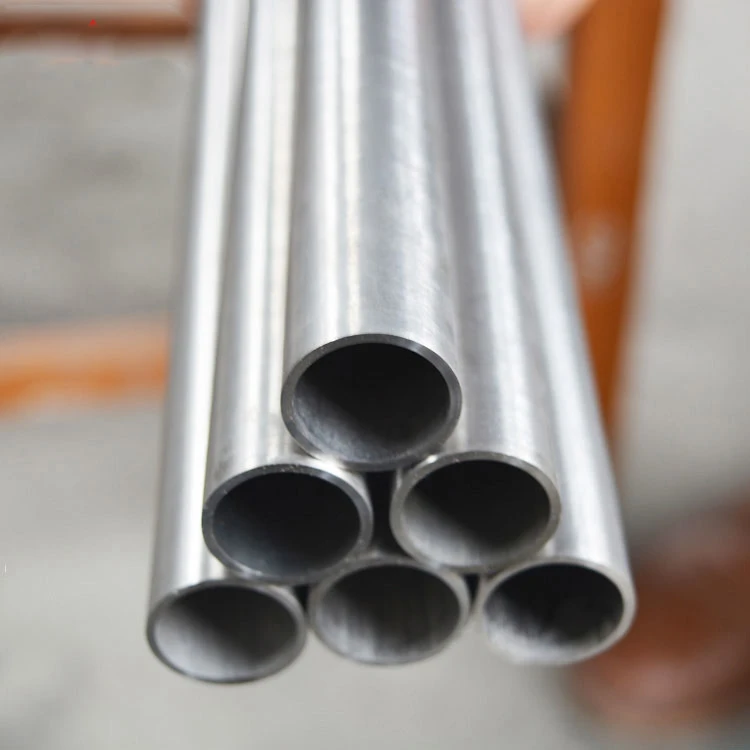
Our Niobium Tubes and Fatigue Resistance
At our company, we are committed to providing high-quality niobium tubes with excellent fatigue resistance. We carefully control the purity and microstructure of our niobium to ensure optimal material properties. Our manufacturing processes are designed to produce tubes with smooth surface finishes, which help to improve their fatigue performance.
We also offer a range of surface treatments and coatings to further enhance the fatigue resistance of our niobium tubes. These treatments can be tailored to the specific requirements of our customers' applications, ensuring that the tubes can withstand the harsh operating conditions.
Contact Us for Niobium Tube Procurement
If you are in need of high-quality niobium tubes with excellent fatigue life, we invite you to Contact Us. Our team of experts can provide you with detailed information about our products and help you select the right niobium tubes for your application. We are dedicated to providing the best possible service and products to meet your needs.
References
- Smith, J. K. (2018). Fatigue of Engineering Materials. Cambridge University Press.
- Davis, J. R. (2000). Niobium: Properties, Processing, and Applications. ASM International.
- ASTM E466 - 15. Standard Practice for Conducting Force - Controlled Constant - Amplitude Axial Fatigue Tests of Metallic Materials.