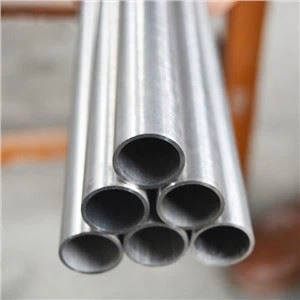
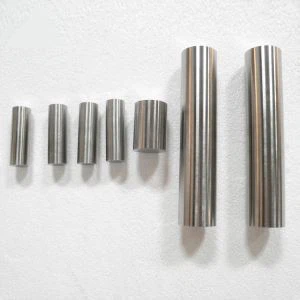
As a seasoned supplier of titanium tubes, I often encounter inquiries about the density of titanium tubes. Density is a fundamental physical property that plays a crucial role in various applications, from aerospace engineering to medical devices. In this blog post, I will delve into the concept of density, explain the density of titanium tubes, and discuss its implications in different industries.
Understanding Density
Density is defined as the mass of a substance per unit volume. It is typically expressed in grams per cubic centimeter (g/cm³) or kilograms per cubic meter (kg/m³). The density of a material provides valuable information about its composition, structure, and physical properties. For example, materials with high density are generally heavier and more compact, while those with low density are lighter and more porous.
The density of a substance can be calculated using the following formula:
[ \text{Density} (\rho) = \frac{\text{Mass} (m)}{\text{Volume} (V)} ]
To determine the density of a titanium tube, we need to know its mass and volume. The mass can be measured using a scale, while the volume can be calculated based on the tube's dimensions (length, outer diameter, and inner diameter).
Density of Titanium Tubes
Titanium is a lightweight, strong, and corrosion-resistant metal that is widely used in various industries. The density of pure titanium is approximately 4.506 g/cm³ at room temperature. However, the density of titanium tubes can vary depending on several factors, including the alloy composition, manufacturing process, and heat treatment.
Most titanium tubes are made from titanium alloys, which are mixtures of titanium with other elements such as aluminum, vanadium, and molybdenum. These alloying elements can significantly affect the density of the tube. For example, the density of Ti-6Al-4V, one of the most commonly used titanium alloys, is around 4.43 g/cm³. This is slightly lower than the density of pure titanium due to the presence of lighter alloying elements.

The manufacturing process can also influence the density of titanium tubes. Tubes produced by different methods, such as seamless tube manufacturing or welded tube fabrication, may have slightly different densities. Seamless tubes are generally more uniform in density compared to welded tubes, as they are formed from a single piece of metal without any joints or seams.
Heat treatment is another factor that can affect the density of titanium tubes. Annealing, for example, is a heat treatment process that can improve the ductility and toughness of titanium tubes. During annealing, the metal is heated to a specific temperature and then cooled slowly. This process can cause changes in the crystal structure of the titanium, which may result in a slight change in density.
Implications of Density in Different Industries
The density of titanium tubes has significant implications in various industries. Here are some examples:
Aerospace Industry
In the aerospace industry, weight is a critical factor. Every kilogram of weight saved can translate into significant fuel savings and increased payload capacity. Titanium tubes are widely used in aircraft structures, engines, and hydraulic systems due to their high strength-to-weight ratio. The relatively low density of titanium tubes makes them an ideal choice for aerospace applications, as they can help reduce the overall weight of the aircraft without compromising its strength and performance.
Medical Industry
In the medical industry, titanium is a popular choice for implants and surgical instruments due to its biocompatibility and corrosion resistance. The density of titanium tubes is important in medical applications, as it can affect the comfort and functionality of the implants. For example, in dental implants, a lower density titanium tube may be more comfortable for the patient, as it is lighter and less likely to cause irritation or discomfort.
Chemical Industry
In the chemical industry, titanium tubes are used in various applications, such as heat exchangers, reactors, and piping systems. The corrosion resistance of titanium makes it an excellent choice for handling corrosive chemicals. The density of titanium tubes can affect the design and performance of these systems. For example, in a heat exchanger, a lower density titanium tube may allow for better heat transfer, as it can conduct heat more efficiently.
Marine Industry
In the marine industry, titanium tubes are used in shipbuilding, offshore platforms, and desalination plants. The corrosion resistance of titanium makes it an ideal choice for marine applications, as it can withstand the harsh marine environment. The density of titanium tubes is important in marine applications, as it can affect the buoyancy and stability of the structures. For example, in a ship's hull, a lower density titanium tube may help reduce the weight of the ship, which can improve its fuel efficiency and speed.
Our Titanium Tube Products
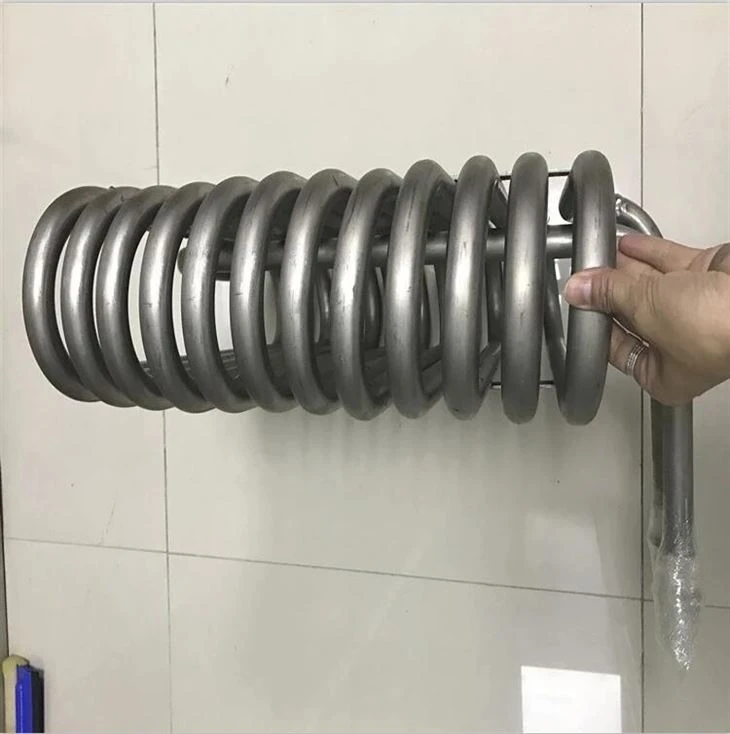
As a leading supplier of titanium tubes, we offer a wide range of products to meet the needs of different industries. Our product portfolio includes ANSI B36.1 Titanium Tubes, Titanium Coil Tubes, and ASTM B338 Titanium Pipe.
Our titanium tubes are made from high-quality titanium alloys and are manufactured using advanced production techniques. We ensure that our products meet the highest quality standards and are tested thoroughly to ensure their performance and reliability. Whether you need titanium tubes for aerospace, medical, chemical, or marine applications, we have the expertise and resources to provide you with the right solution.
Contact Us for Procurement
If you are interested in purchasing titanium tubes, we would be delighted to discuss your requirements. Our team of experts can provide you with detailed information about our products, including their density, specifications, and pricing. We can also offer customized solutions to meet your specific needs.
To start the procurement process, simply reach out to us. We are committed to providing excellent customer service and ensuring that you get the best value for your investment. Don't hesitate to contact us today to explore how our titanium tubes can benefit your business.
References
- ASM Handbook Committee. (2000). ASM Handbook Volume 2: Properties and Selection: Nonferrous Alloys and Special-Purpose Materials. ASM International.
- Callister, W. D., & Rethwisch, D. G. (2014). Materials Science and Engineering: An Introduction. Wiley.
- Titanium Information Group. (n.d.). Titanium: The Element. Retrieved from https://www.titanium.org/