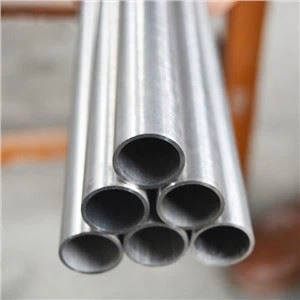
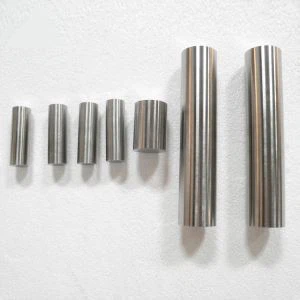
As a dedicated supplier of niobium bars, I've witnessed firsthand the growing demand for high - performance niobium products across various industries. Niobium, a remarkable transition metal, is known for its unique properties such as high melting point, corrosion resistance, and superconductivity at low temperatures. However, there are several ways to further enhance the properties of a niobium bar to meet the increasingly stringent requirements of modern applications.
Alloying
One of the most effective methods to improve the properties of a niobium bar is through alloying. By adding specific elements to niobium, we can tailor its mechanical, chemical, and physical properties. For instance, adding titanium to niobium can significantly improve its strength and ductility. Titanium - niobium alloys are widely used in aerospace applications, where high - strength and lightweight materials are essential. These alloys can withstand high - stress environments and extreme temperatures, making them ideal for components such as turbine blades and structural parts in aircraft.
Another common alloying element is zirconium. Niobium - zirconium alloys exhibit excellent corrosion resistance, especially in harsh chemical environments. This property makes them suitable for use in chemical processing equipment, such as reactors and pipelines. The addition of zirconium also enhances the creep resistance of niobium, which is crucial for applications where the material is subjected to long - term stress at elevated temperatures.
Hafnium is yet another element that can be added to niobium to improve its properties. Niobium - hafnium alloys have high melting points and good oxidation resistance. They are often used in high - temperature applications, such as rocket nozzles and heat shields. The hafnium in the alloy forms a protective oxide layer on the surface of the niobium bar, preventing further oxidation and degradation of the material.
Heat Treatment
Heat treatment is a crucial process for enhancing the properties of niobium bars. Different heat - treatment methods can be employed to achieve specific goals, such as improving hardness, strength, or ductility.
Annealing is a common heat - treatment process for niobium. By heating the niobium bar to a specific temperature and then slowly cooling it, we can relieve internal stresses and improve its ductility. This process is particularly useful for niobium bars that have undergone cold - working, such as rolling or forging. Annealed niobium bars are more malleable and easier to machine, making them suitable for a wide range of applications.
Quenching and tempering are other heat - treatment techniques that can be used to improve the strength and hardness of niobium bars. Quenching involves rapidly cooling the heated niobium bar in a quenching medium, such as water or oil. This process creates a hard and brittle structure in the niobium. Subsequently, tempering is carried out by heating the quenched niobium bar to a lower temperature and then cooling it slowly. Tempering reduces the brittleness of the quenched niobium and improves its toughness, making it more suitable for applications where high strength and toughness are required.
Surface Treatment
Surface treatment is an important aspect of improving the properties of niobium bars. A well - treated surface can enhance the corrosion resistance, wear resistance, and biocompatibility of the niobium bar.
One common surface - treatment method is coating. Applying a protective coating to the surface of the niobium bar can prevent corrosion and oxidation. For example, a thin layer of titanium nitride (TiN) can be deposited on the niobium bar using physical vapor deposition (PVD) techniques. TiN coatings are known for their high hardness, wear resistance, and corrosion resistance. They can significantly extend the service life of niobium bars in abrasive and corrosive environments.
Electropolishing is another surface - treatment process that can improve the surface finish and corrosion resistance of niobium bars. During electropolishing, the niobium bar is immersed in an electrolyte solution and an electric current is applied. This process removes a thin layer of material from the surface of the niobium bar, resulting in a smooth and shiny surface. Electropolished niobium bars have better resistance to corrosion and are easier to clean, making them suitable for applications in the food and beverage industry, as well as in medical devices.
Grain Refinement
Grain refinement is a technique that can improve the mechanical properties of niobium bars. By reducing the grain size of the niobium, we can increase its strength, hardness, and ductility.
One way to achieve grain refinement is through thermomechanical processing. This involves a combination of deformation and heat treatment. For example, hot - rolling the niobium bar followed by a controlled annealing process can result in a fine - grained structure. The deformation during hot - rolling breaks up the large grains, and the subsequent annealing process allows the new, smaller grains to form and grow.
Another method is the addition of grain - refining agents. Certain elements, such as boron and carbon, can act as grain - refining agents in niobium. These elements can pin the grain boundaries and prevent grain growth during heat treatment, resulting in a finer - grained structure.
Purification
High - purity niobium bars often exhibit better properties than those with impurities. Purification processes can be used to remove unwanted elements and improve the quality of the niobium bar.
One common purification method is electron beam melting (EBM). In this process, the niobium bar is melted by an electron beam in a high - vacuum environment. The impurities in the niobium have different vapor pressures than the niobium itself, and they are preferentially vaporized during the melting process. This results in a purer niobium bar with improved properties.
Another purification technique is the use of chemical purification methods. For example, niobium can be dissolved in a suitable acid solution, and then the impurities can be removed through precipitation or ion - exchange processes. The purified niobium can then be recovered by reducing the solution.


At our company, we offer a wide range of Pure Niobium Bar products. Our niobium bars are produced using state - of - the - art technologies and strict quality - control measures to ensure the highest level of performance. Whether you need niobium bars for aerospace, chemical processing, medical, or other applications, we can provide you with customized solutions to meet your specific requirements.
If you are interested in our niobium bar products or would like to discuss how we can improve the properties of niobium bars for your specific application, please feel free to contact us. We are always ready to engage in procurement discussions and help you find the best niobium solutions for your needs.
References
- ASM Handbook, Volume 2: Properties and Selection: Nonferrous Alloys and Special - Purpose Materials. ASM International.
- “Niobium and Niobium Alloys” by R. A. Rapp. In: Comprehensive Materials Processing, 2014.
- “Surface Engineering for Corrosion and Wear Protection” by G. S. Frankel and M. I. De Barbadillo. Elsevier, 2017.