

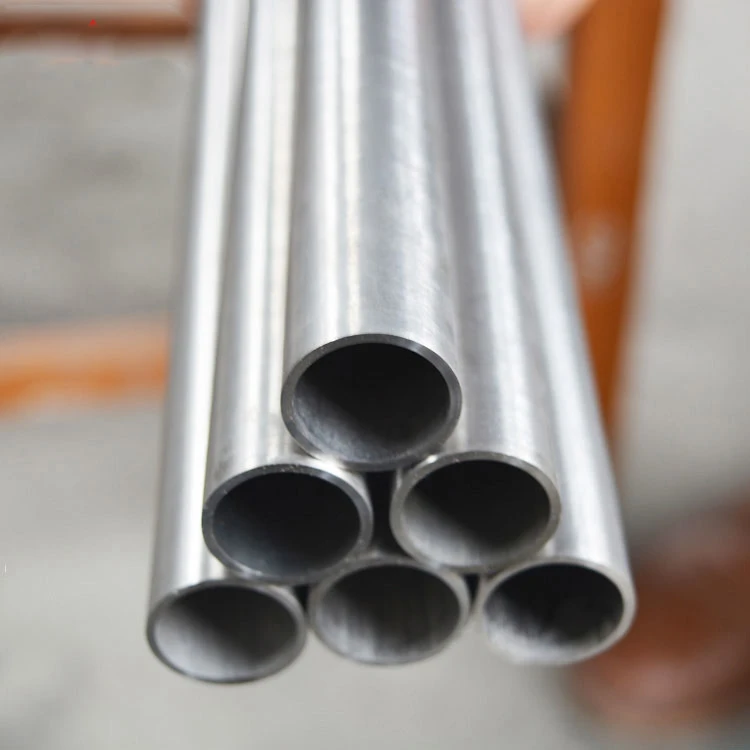
As a supplier of Niobium Tube, I am excited to share with you the fascinating physical properties of this remarkable material. Niobium, a transition metal with the atomic number 41, is known for its unique combination of properties that make it highly valuable in various industries. In this blog post, we will explore the key physical properties of niobium tubes and their implications for different applications.
Density and Mass
Niobium has a relatively high density of approximately 8.57 g/cm³. This characteristic gives niobium tubes a substantial mass, which can be advantageous in applications where weight is a critical factor. For example, in aerospace and automotive industries, the high density of niobium tubes can contribute to the structural integrity of components while maintaining a reasonable weight. The density also affects the handling and transportation of niobium tubes, as they are heavier compared to some other metals. However, this density is also a sign of the material's strength and durability, making it suitable for demanding environments.
Melting and Boiling Points
One of the most impressive physical properties of niobium is its extremely high melting point of 2468 °C and boiling point of 4742 °C. These high temperatures make niobium tubes ideal for applications that involve exposure to extreme heat. In the aerospace industry, niobium tubes can be used in rocket engines and other high-temperature components, where they can withstand the intense heat generated during combustion. In the nuclear industry, niobium tubes are used in reactors due to their ability to maintain their structural integrity at high temperatures. The high melting and boiling points also make niobium tubes resistant to thermal deformation, ensuring reliable performance in challenging conditions.
Electrical Conductivity
Niobium is a good conductor of electricity. Its electrical conductivity is relatively high, which makes niobium tubes suitable for electrical and electronic applications. In the field of superconductivity, niobium is a key material. Niobium-titanium alloys, for example, are widely used in superconducting magnets. These magnets are essential in magnetic resonance imaging (MRI) machines, particle accelerators, and other high-tech equipment. The high electrical conductivity of niobium tubes allows for efficient transmission of electrical current, reducing energy losses and improving the overall performance of electrical systems.
Thermal Conductivity
Niobium has a moderate thermal conductivity. This property is important in applications where heat transfer needs to be controlled. In some industrial processes, niobium tubes can be used to transfer heat efficiently while maintaining a stable temperature. For example, in heat exchangers, niobium tubes can help in the transfer of heat between different fluids. The moderate thermal conductivity also means that niobium tubes can act as a thermal barrier in certain situations, preventing excessive heat transfer and protecting sensitive components.
Ductility and Malleability
Niobium is highly ductile and malleable. This means that niobium tubes can be easily formed into various shapes and sizes without cracking or breaking. The ductility of niobium allows for the production of thin-walled tubes with precise dimensions. In the manufacturing of jewelry and decorative items, niobium tubes can be shaped into intricate designs due to their malleability. In the medical field, niobium tubes can be bent and formed to fit specific anatomical requirements, making them suitable for use in surgical instruments and implants.
Corrosion Resistance
Niobium has excellent corrosion resistance, especially in harsh chemical environments. It forms a thin, stable oxide layer on its surface, which protects the underlying metal from corrosion. This property makes niobium tubes highly suitable for use in the chemical processing industry, where they can be exposed to corrosive chemicals such as acids and alkalis. In the marine industry, niobium tubes can resist the corrosive effects of seawater, making them ideal for use in offshore structures and desalination plants. The corrosion resistance of niobium tubes also extends their service life, reducing maintenance costs and improving the reliability of systems.
Magnetic Properties
Niobium is a paramagnetic material. This means that it is weakly attracted to magnetic fields. In some applications, the paramagnetic nature of niobium can be advantageous. For example, in certain electronic devices, the weak magnetic properties of niobium tubes can help in reducing electromagnetic interference. In magnetic resonance imaging (MRI), the paramagnetic properties of niobium can be used to enhance the contrast of images, improving the diagnostic capabilities of the technology.
Hardness and Strength
Niobium has a relatively high hardness and strength. This makes niobium tubes capable of withstanding high mechanical stresses. In the construction of high-pressure vessels and pipelines, niobium tubes can provide reliable performance under extreme pressure conditions. The strength of niobium tubes also allows them to be used in structural applications where they need to support heavy loads. The combination of hardness and strength makes niobium tubes a durable and long-lasting solution for various industrial applications.
Applications of Niobium Tubes Based on Physical Properties
The unique physical properties of niobium tubes make them suitable for a wide range of applications. In the aerospace industry, the high melting point, strength, and low density of niobium tubes are utilized in the construction of rocket engines, aircraft components, and satellite parts. In the medical field, the biocompatibility, corrosion resistance, and malleability of niobium tubes make them ideal for use in surgical implants, such as stents and orthopedic devices. In the energy sector, niobium tubes are used in nuclear reactors, solar panels, and fuel cells due to their high temperature resistance and electrical conductivity.
Conclusion
In conclusion, the physical properties of niobium tubes, including their density, melting and boiling points, electrical and thermal conductivity, ductility, malleability, corrosion resistance, magnetic properties, hardness, and strength, make them a versatile and valuable material in various industries. As a supplier of Niobium Tube, we understand the importance of these properties and are committed to providing high-quality niobium tubes that meet the specific requirements of our customers.
If you are interested in purchasing niobium tubes for your applications, we invite you to contact us for further discussion. Our team of experts is ready to assist you in selecting the right niobium tubes and providing you with detailed technical information. We look forward to working with you and helping you achieve your project goals.
References
- "Niobium: Properties, Applications, and Market Trends." Journal of Materials Science and Technology.
- "The Physical and Chemical Properties of Niobium." International Journal of Metallurgy and Materials.
- "Advances in Niobium Technology." Proceedings of the Niobium Conference.



