Hey there! As a supplier of titanium materials, I'm super stoked to chat with you about the elastic modulus properties of titanium materials. It's not just some dry, technical stuff; it's what makes titanium such a rockstar in various industries. So, let's dive right in!
First off, what on earth is the elastic modulus? Well, think of it as a measure of how a material responds to being stretched or squished. In simpler terms, it's a way to tell how stiff a material is. When you pull or push on a material, it will either stretch or compress. The elastic modulus gives you an idea of how much it will deform under a given force.
Titanium is like the superhero of metals when it comes to its elastic modulus. It has a relatively high elastic modulus compared to other metals. This means that it can withstand a good amount of stress without deforming permanently. For instance, in the aerospace industry, where weight is a big deal, titanium's high elastic modulus is a game - changer. Planes need materials that can handle the stresses of flight, like the pressure changes and the forces during take - off and landing. Titanium can do this while being relatively lightweight.
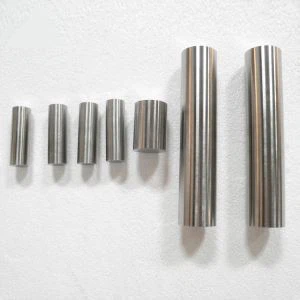
One of the cool things about titanium is that its elastic modulus can vary depending on its alloy composition. Different alloys are made by adding other elements to titanium, and these additions can tweak the properties of the material. For example, Gr9 Ti - 3Al - 2.5V Titanium Bar Titanium Round Rod is an alloy that contains aluminum and vanadium. These elements change the way the atoms in the titanium are arranged, which in turn affects the elastic modulus. This particular alloy is known for its good balance of strength and ductility, and its elastic modulus is well - suited for applications where you need a bit of flexibility along with strength, like in some aircraft components.
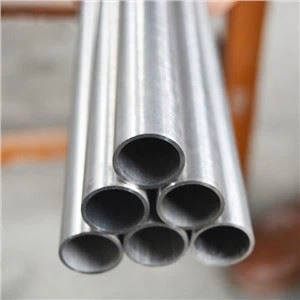
Another important aspect of titanium's elastic modulus is its relationship with temperature. As the temperature goes up, the elastic modulus of titanium generally decreases. This is a common behavior for metals. But here's the thing: titanium can still maintain a relatively high elastic modulus even at elevated temperatures compared to some other metals. This makes it great for applications in high - temperature environments, such as in jet engines. The ASTM B861 Titanium Seamless Tube is an example of a titanium product that can be used in such conditions. These tubes need to maintain their shape and structural integrity even when exposed to the high - heat and high - pressure conditions in an engine.
Now, let's talk about how the elastic modulus affects the manufacturing process. When you're working with titanium, knowing its elastic modulus is crucial for things like machining and forming. If you're trying to bend a titanium rod, for example, you need to know how much force you can apply without causing it to break or deform too much. The elastic modulus helps you calculate this. And it's not just about the initial forming; it also matters for how the material will perform over time. For instance, in a structural component, the elastic modulus determines how the material will respond to repeated loading and unloading cycles.
The ASTM B381 600mm 800mm Forging Titanium Discs are a prime example of a product where the elastic modulus plays a big role. These discs need to be forged into the right shape, and the elastic modulus affects how they will behave during the forging process. If the elastic modulus is too high, it might be difficult to forge the disc into the desired shape. On the other hand, if it's too low, the disc might not be strong enough to withstand the loads it will encounter in its end - use application.
In the medical field, titanium's elastic modulus is also a key factor. Titanium implants, like hip and knee replacements, need to have an elastic modulus that is close to that of human bone. This is because if the elastic modulus of the implant is too different from the bone, it can lead to a phenomenon called stress - shielding. Stress - shielding happens when the implant takes on too much of the stress, causing the bone around it to weaken over time. Titanium's ability to have an elastic modulus that can be tailored to match bone properties makes it an ideal material for these applications.
But why should you choose us as your titanium materials supplier? Well, we've got a wide range of titanium products, and we know our stuff when it comes to the elastic modulus and other properties of titanium. We can help you select the right alloy and product for your specific application. Whether you're in the aerospace, medical, or any other industry that uses titanium, we've got you covered.
If you're interested in learning more about our titanium materials or have any questions about the elastic modulus properties, don't hesitate to reach out. We're here to have a chat, answer your questions, and help you with your procurement needs. Let's work together to find the perfect titanium solution for your project.
References:


- Callister, W. D., & Rethwisch, D. G. (2014). Materials Science and Engineering: An Introduction. Wiley.
- ASM Handbook, Volume 2: Properties and Selection: Nonferrous Alloys and Special - Purpose Materials. ASM International.