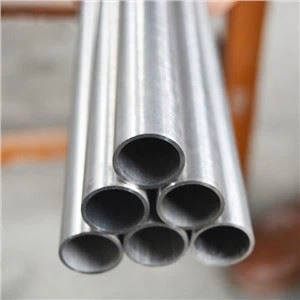
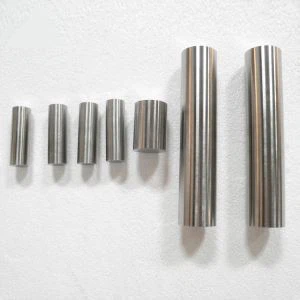
Tantalum, a lesser - known yet highly valuable metal, has been making waves in various industries due to its exceptional properties. As a supplier of Tantalum Bars, I often get asked a crucial question: "Is tantalum bar corrosion - resistant?" In this blog, we will delve deep into the science behind tantalum's resistance to corrosion, explore its applications in corrosive environments, and understand why it stands out among other metals in this regard.
The Science Behind Tantalum's Corrosion Resistance
Tantalum is a transition metal with the atomic number 73. One of the key factors contributing to its corrosion resistance is the formation of a passive oxide film on its surface. When tantalum is exposed to oxygen, a thin, stable, and adherent layer of tantalum pentoxide (Ta₂O₅) forms spontaneously. This oxide film acts as a barrier between the tantalum metal and the corrosive medium, preventing direct contact and thus protecting the underlying metal from being attacked.
The Ta₂O₅ film is highly insoluble in most common corrosive agents, including acids and alkalis. It has a high dielectric constant and is very hard, which gives it excellent mechanical stability. This means that even under harsh conditions, the oxide film remains intact and continues to provide protection. For example, in concentrated sulfuric acid at room temperature, tantalum can resist corrosion for an extended period. The chemical reaction on the surface that leads to the formation of the protective film is a key aspect of its corrosion - resistance mechanism.
Tantalum Bars in Acidic Environments
One of the most demanding environments for any metal is highly acidic conditions. Many industrial processes, such as chemical manufacturing, pickling operations in the metalworking industry, and battery production, involve the use of strong acids. Tantalum bars have proven to be extremely reliable in such scenarios.


Take the case of hydrofluoric acid (HF), which is one of the most aggressive acids known. While most metals are rapidly corroded by HF, tantalum can withstand its corrosive action up to a certain concentration and temperature range. The passive oxide film on tantalum can resist the attack of HF to some extent, although high - temperature and high - concentration conditions may require more specialized handling.
In the chemical processing industry, tantalum bars are used in equipment like reactors, heat exchangers, and piping systems that are in contact with strong acids. For instance, in the production of high - purity chemicals, the corrosion resistance of tantalum ensures that the final product is not contaminated by metal ions released from the equipment. This is crucial in industries where even trace amounts of impurities can affect the quality of the product.
Performance in Alkaline and Saline Environments
Tantalum is also remarkably resistant to alkaline solutions and saline environments. In alkaline media, the Ta₂O₅ film remains stable, preventing the dissolution of the tantalum metal. This makes tantalum bars suitable for applications in industries such as pulp and paper manufacturing, where alkaline solutions are commonly used.
In saline environments, such as seawater, tantalum shows excellent resistance compared to many other metals. Seawater contains a variety of salts and has a complex chemical composition that can cause severe corrosion to metals. However, tantalum's protective oxide film remains intact in seawater, allowing it to be used in marine applications. For example, tantalum bars can be used in the construction of offshore oil and gas platforms, where they can withstand the corrosive effects of seawater for long periods.
Comparison with Other Corrosion - Resistant Metals
When compared to other well - known corrosion - resistant metals like stainless steel and titanium, tantalum offers distinct advantages. Stainless steel is widely used due to its affordability and decent corrosion resistance. However, it can be susceptible to pitting and crevice corrosion in certain aggressive environments, especially in the presence of chlorides. Titanium, on the other hand, has good corrosion resistance in many environments, but it may not be as resistant as tantalum in extremely acidic or alkaline conditions.
Tantalum's superior corrosion resistance allows it to be used in applications where other metals would fail. For example, in the production of concentrated nitric acid, stainless steel would quickly corrode, while tantalum can handle the corrosive environment with ease. This makes tantalum a preferred choice for high - end applications where reliability and long - term performance are critical.
Applications of Tantalum Bars in Corrosive Industries
The corrosion - resistant properties of tantalum bars have led to their widespread use in several industries. In the pharmaceutical industry, tantalum bars are used in the production of high - purity drugs. The strict quality requirements in this industry demand equipment that is free from corrosion to prevent contamination of the drugs. Tantalum's corrosion resistance ensures that the production equipment remains in good condition and does not introduce any impurities into the drugs.
The electronics industry also benefits from tantalum's properties. Tantalum capacitors, which are made using tantalum bars, are known for their high capacitance, low leakage current, and long - term stability. These capacitors are used in a wide range of electronic devices, from smartphones to military equipment. The corrosion resistance of tantalum ensures the reliability of the capacitors in various operating conditions.
The Importance of Quality in Tantalum Bars
As a Tantalum Bar supplier, I understand the importance of providing high - quality products. The corrosion - resistant properties of tantalum bars are highly dependent on their purity and the manufacturing process. Impurities in the tantalum can disrupt the formation of the protective oxide film, reducing its corrosion resistance.
We use advanced manufacturing techniques to ensure that our tantalum bars have the highest possible purity. Our production process includes strict quality control measures to detect and eliminate any impurities. This guarantees that our customers receive tantalum bars that offer excellent corrosion resistance and meet the highest industry standards.
Product Range
We offer a diverse range of tantalum products, including Tantalum Rod and Tantalum Round Bar. Our tantalum rods are available in various diameters and lengths, suitable for different industrial applications. Whether you need small - diameter rods for precision electronics or large - diameter rods for heavy - duty chemical processing equipment, we can provide the right product for your needs.
Our tantalum round bars are also precision - manufactured to ensure consistent quality. They are available in high - purity grades, which further enhance their corrosion resistance. The round bars can be easily machined into different shapes and sizes according to your specific requirements.
Conclusion and Call to Action
In conclusion, tantalum bars are highly corrosion - resistant due to the formation of a stable passive oxide film on their surface. This property makes them suitable for a wide range of applications in corrosive environments, from chemical processing to electronics. As a reliable supplier of tantalum bars, we are committed to providing high - quality products that meet the needs of our customers.
If you are in the market for corrosion - resistant tantalum bars, we invite you to contact us for a detailed discussion. Our team of experts can help you select the right product for your specific application, provide technical support, and offer competitive pricing. Whether you are a small - scale manufacturer or a large - scale industrial enterprise, we are here to assist you in finding the best tantalum bar solutions.
References
- Cotton, F. A., & Wilkinson, G. (1988). Advanced Inorganic Chemistry. John Wiley & Sons.
- Schlesinger, M. E., King, M., Sole, K. C., & Davenport, W. G. (2011). Extractive Metallurgy of Copper. Butterworth - Heinemann.
- Uhlig, H. H., & Revie, R. W. (1985). Corrosion and Corrosion Control. John Wiley & Sons.