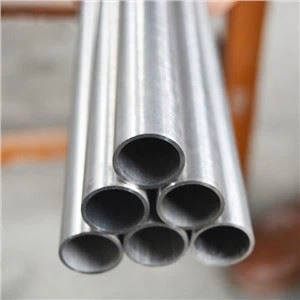
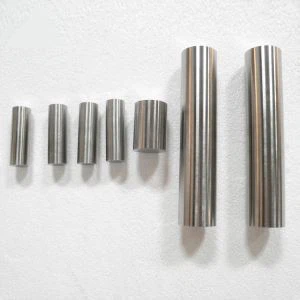
Hey there! As a tantalum tube supplier, I often get asked whether tantalum tubes can be used in the semiconductor industry. Well, let's dive right into it and find out.
First off, let's talk a bit about tantalum itself. Tantalum is a rare, hard, blue-gray, lustrous transition metal that is highly corrosion - resistant. It has a high melting point (about 3017°C), which makes it a great candidate for high - temperature applications.
In the semiconductor industry, precision and reliability are of utmost importance. Semiconductor manufacturing processes involve a lot of high - temperature and corrosive chemical environments. Tantalum tubes have several properties that make them potentially suitable for this industry.
One of the key advantages of tantalum tubes is their excellent corrosion resistance. In semiconductor fabrication, various chemicals like acids and alkalis are used for etching, cleaning, and doping processes. Tantalum can withstand the attack of many aggressive chemicals, including sulfuric acid, hydrochloric acid, and nitric acid under certain conditions. This means that tantalum tubes can be used to transport or contain these corrosive substances without getting damaged easily, ensuring the stability of the manufacturing process.
Another important aspect is tantalum's high melting point. Semiconductor manufacturing often involves high - temperature processes such as annealing, where the semiconductor material is heated to a high temperature to improve its electrical properties. Tantalum tubes can maintain their structural integrity at these high temperatures, which is crucial for preventing any contamination or failure during the manufacturing process.
Tantalum also has good ductility, which allows it to be fabricated into different shapes and sizes of tubes. This flexibility in manufacturing means that we can customize tantalum tubes according to the specific requirements of semiconductor manufacturers. Whether they need small - diameter tubes for precise fluid delivery or large - diameter tubes for bulk material handling, we can provide them.
Now, let's take a look at some of the specific applications of tantalum tubes in the semiconductor industry.
-
Chemical Delivery Systems
In semiconductor fabrication plants, chemicals need to be delivered precisely to the processing equipment. Tantalum tubes can be used in chemical delivery systems due to their corrosion resistance. They can ensure that the chemicals are transported without any contamination from the tube material itself. For example, in the process of chemical vapor deposition (CVD), where precursor gases are used to deposit thin films on the semiconductor wafer, tantalum tubes can be used to deliver these gases safely and accurately. -
Heat Exchangers
Heat management is a critical aspect of semiconductor manufacturing. High - power semiconductor devices generate a lot of heat, and efficient heat dissipation is necessary to maintain their performance. Tantalum tubes can be used in heat exchangers because of their high thermal conductivity and corrosion resistance. They can transfer heat effectively while being able to withstand the corrosive coolants used in the heat exchange process. -
Vacuum Systems
Semiconductor manufacturing often takes place in a vacuum environment to prevent contamination. Tantalum tubes can be used in vacuum systems. Their low outgassing rate is an important property in vacuum applications. Outgassing is the release of gas from a material, and in a vacuum system, any outgassing can contaminate the semiconductor wafer. Tantalum tubes have a very low outgassing rate, making them suitable for use in vacuum chambers and pumping systems.
However, it's not all rosy. There are also some challenges associated with using tantalum tubes in the semiconductor industry.
One of the main challenges is the cost. Tantalum is a rare metal, and its extraction and processing are quite expensive. This means that tantalum tubes are relatively costly compared to tubes made from other materials. Semiconductor manufacturers, who are always looking to reduce costs, may be hesitant to use tantalum tubes due to their high price.
Another challenge is the difficulty in machining. Tantalum is a hard metal, and machining it into tubes with high precision can be a complex and time - consuming process. This requires specialized equipment and skilled workers, which also adds to the overall cost.
Despite these challenges, the unique properties of tantalum tubes make them a valuable option in the semiconductor industry. As technology advances and the demand for higher - performance semiconductors grows, the need for materials that can withstand more extreme conditions will also increase. Tantalum tubes, with their corrosion resistance, high melting point, and other excellent properties, are well - positioned to meet these emerging needs.
If you're in the semiconductor industry and are interested in exploring the use of tantalum tubes for your manufacturing processes, I encourage you to check out our Tantalum Tubes and Tantalum Tubes pages on our website. We offer a wide range of tantalum tubes with different specifications and can also provide customized solutions according to your specific requirements.
We understand the importance of quality and reliability in the semiconductor industry, and we are committed to providing the best - quality tantalum tubes. Whether you need a small quantity for research and development or a large - scale supply for mass production, we can meet your needs. So, if you're looking for a reliable tantalum tube supplier for your semiconductor manufacturing processes, feel free to get in touch with us to start a procurement discussion.
References


- "Handbook of Tantalum and Niobium Science and Technology"
- "Semiconductor Manufacturing Technology" textbooks
- Industry reports on semiconductor materials and manufacturing processes