What is the electrical resistivity of a titanium basket?
As a trusted supplier of Titanium Baskets, I often encounter inquiries about the electrical resistivity of titanium baskets. Understanding this property is crucial for various applications, especially in electroplating and electrochemical processes. In this blog post, I will delve into the concept of electrical resistivity, explore the factors that affect the electrical resistivity of titanium baskets, and highlight its significance in practical use.
Understanding Electrical Resistivity
Electrical resistivity, denoted by the Greek letter ρ (rho), is a fundamental property of a material that quantifies how strongly it resists the flow of electric current. It is defined as the resistance of a unit length and unit cross-sectional area of the material. The SI unit of electrical resistivity is the ohm-meter (Ω·m).
The resistance (R) of a conductor is related to its resistivity (ρ), length (L), and cross-sectional area (A) by the following formula:
[R=\rho\frac{L}{A}]

From this formula, we can see that the resistance of a conductor increases with its length and decreases with its cross-sectional area. Additionally, materials with higher resistivity will have higher resistance for the same length and cross-sectional area.
Electrical Resistivity of Titanium
Titanium is a metal known for its excellent corrosion resistance, high strength-to-weight ratio, and biocompatibility. However, when it comes to electrical conductivity, titanium is not as conductive as some other metals like copper or aluminum. The electrical resistivity of titanium at room temperature (20°C) is approximately (4.2×10^{ -7}) Ω·m. This value indicates that titanium has a relatively high resistance to the flow of electric current compared to highly conductive metals.
The high resistivity of titanium is due to its atomic structure and electronic properties. Titanium has a partially filled d - electron shell, which leads to strong electron - atom interactions. These interactions impede the movement of electrons through the material, resulting in higher resistivity.
Factors Affecting the Electrical Resistivity of Titanium Baskets
The electrical resistivity of a titanium basket can be influenced by several factors:
-
Purity of Titanium: The purity of the titanium used in the basket plays a significant role in its electrical resistivity. Impurities in titanium can scatter electrons, increasing the resistivity. High - purity titanium has fewer defects and impurities, which allows electrons to move more freely, resulting in lower resistivity.
-
Temperature: Like most metals, the electrical resistivity of titanium increases with temperature. As the temperature rises, the atoms in the titanium lattice vibrate more vigorously, which increases the probability of electron - atom collisions. These collisions impede the flow of electrons, leading to an increase in resistivity.
-
Mechanical Processing: The manufacturing process of the titanium basket, such as forging, rolling, or welding, can affect its electrical resistivity. Mechanical processing can introduce internal stresses and defects in the titanium structure, which can scatter electrons and increase resistivity. Heat treatment after processing can sometimes relieve these stresses and reduce resistivity.
-
Surface Condition: The surface of the titanium basket can also impact its electrical resistivity. A rough or oxidized surface can increase the contact resistance between the basket and the electrical connections, effectively increasing the overall resistance. Proper surface treatment, such as polishing or passivation, can improve the electrical contact and reduce resistivity.
Significance of Electrical Resistivity in Titanium Basket Applications
Electroplating
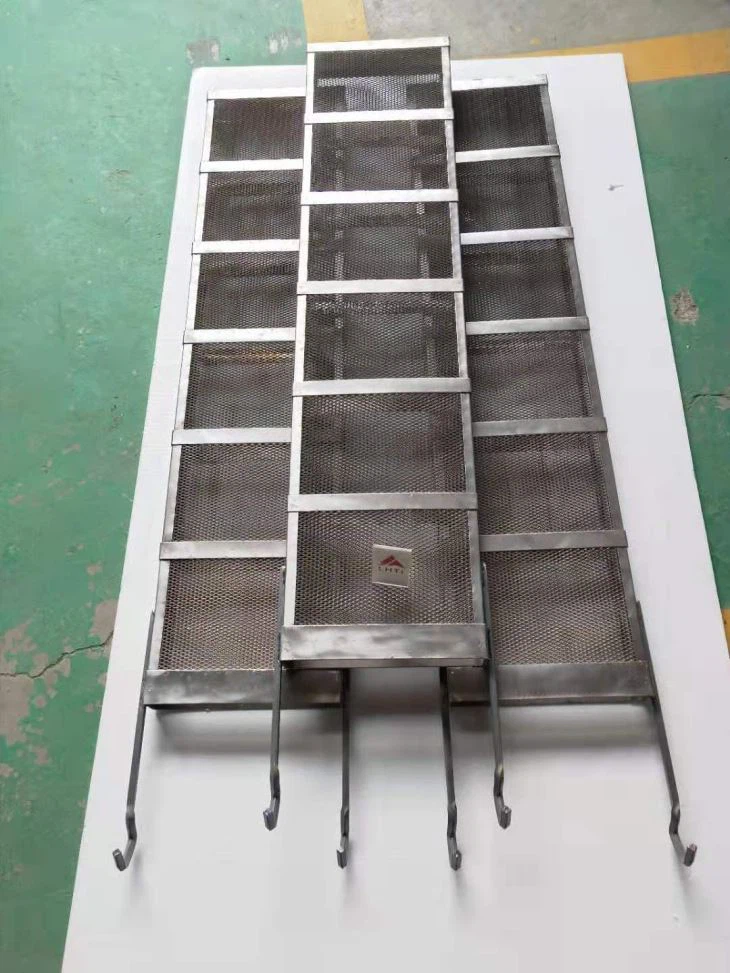
In Titanium Basket For Electroplating, the electrical resistivity of the titanium basket is a critical factor. Electroplating is an electrochemical process in which a metal coating is deposited onto a substrate. The titanium basket is used as an anode, and it holds the soluble metal anodes.
The electrical resistivity of the titanium basket affects the distribution of current within the electroplating bath. A basket with high resistivity may cause uneven current distribution, leading to non - uniform plating thickness on the substrate. To ensure a uniform and high - quality plating, it is essential to use a titanium basket with low and consistent resistivity.
Electrochemical Processes
In other electrochemical processes, such as electrolysis and electrowinning, the titanium basket is also used as an electrode. The electrical resistivity of the basket affects the energy efficiency of the process. Higher resistivity means more energy is dissipated as heat, which reduces the overall efficiency of the electrochemical reaction. Therefore, minimizing the resistivity of the titanium basket is crucial for optimizing these processes.
Our Titanium Baskets
At our company, we are committed to providing high - quality Titanium Anode Basket with optimal electrical properties. We use high - purity titanium in our manufacturing process to minimize the effects of impurities on resistivity. Our advanced manufacturing techniques ensure that the titanium baskets have a uniform structure and low internal stresses, which helps to reduce resistivity.
In addition, we pay special attention to the surface treatment of our titanium baskets. We use precision polishing and passivation processes to ensure a smooth and clean surface, which improves the electrical contact and further reduces resistivity.
Contact Us for Procurement
If you are in need of high - quality titanium baskets for your electroplating or electrochemical applications, we would be delighted to serve you. Our team of experts can provide you with detailed technical information and customized solutions to meet your specific requirements. Whether you need a standard titanium basket or a custom - designed one, we have the capabilities and experience to deliver.
Reach out to us to start a discussion about your procurement needs. We look forward to working with you to achieve your project goals.
References
- Callister, W. D., & Rethwisch, D. G. (2011). Materials Science and Engineering: An Introduction. Wiley.
- Ashby, M. F., & Jones, D. R. H. (2005). Engineering Materials 1: An Introduction to Properties, Applications, and Design. Butterworth - Heinemann.