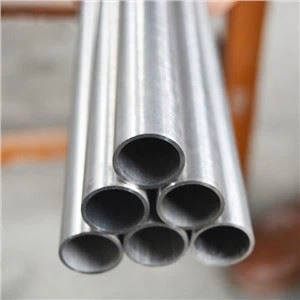
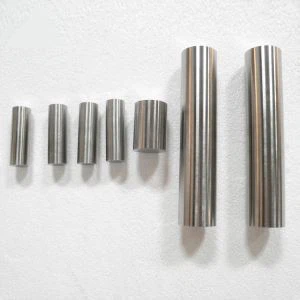
Niobium, a lustrous, gray, ductile transition metal, is renowned for its remarkable physical properties that make it a highly sought-after material in various industries. As a leading supplier of niobium bars, I am excited to delve into the physical characteristics of this extraordinary metal and explore how they contribute to its diverse applications.


Density and Mass
One of the most fundamental physical properties of a niobium bar is its density. Niobium has a density of approximately 8.57 g/cm³, which is relatively high compared to many other metals. This high density gives niobium bars a substantial mass, making them suitable for applications where weight is a crucial factor. For example, in the aerospace industry, niobium bars are used in the construction of aircraft components, such as turbine blades and engine parts, where their high density provides the necessary strength and stability.
Melting and Boiling Points
Niobium has an extremely high melting point of 2,477 °C (4,491 °F) and a boiling point of 4,744 °C (8,571 °F). These high melting and boiling points make niobium bars highly resistant to heat and ideal for use in high-temperature applications. In the nuclear industry, for instance, niobium bars are used in the construction of nuclear reactors due to their ability to withstand the extreme temperatures and pressures generated during nuclear reactions.
Electrical Conductivity
Niobium is an excellent conductor of electricity, with a conductivity that is comparable to that of copper. This property makes niobium bars highly suitable for use in electrical applications, such as wiring, electrical contacts, and superconducting magnets. In fact, niobium is one of the most widely used materials in the production of superconducting magnets, which are essential components in magnetic resonance imaging (MRI) machines, particle accelerators, and other high-tech devices.
Thermal Conductivity
In addition to its excellent electrical conductivity, niobium also has a relatively high thermal conductivity. This means that niobium bars can efficiently transfer heat, making them ideal for use in applications where heat dissipation is crucial. In the electronics industry, for example, niobium bars are used in the construction of heat sinks, which help to dissipate heat generated by electronic components and prevent them from overheating.
Ductility and Malleability
Niobium is a highly ductile and malleable metal, which means that it can be easily drawn into wires or hammered into thin sheets without breaking. This property makes niobium bars highly versatile and suitable for a wide range of applications. In the jewelry industry, for example, niobium bars are used to create intricate and delicate jewelry designs due to their ability to be easily shaped and formed.
Corrosion Resistance
One of the most remarkable physical properties of niobium is its exceptional corrosion resistance. Niobium forms a thin, protective oxide layer on its surface when exposed to air, which helps to prevent further corrosion and oxidation. This property makes niobium bars highly resistant to a wide range of corrosive environments, including acids, alkalis, and saltwater. In the chemical industry, for example, niobium bars are used in the construction of chemical processing equipment, such as reactors and pipelines, due to their ability to withstand the corrosive effects of chemicals.
Magnetic Properties
Niobium is a paramagnetic metal, which means that it is weakly attracted to magnetic fields. This property makes niobium bars suitable for use in applications where magnetic properties are required, such as in the production of magnetic sensors and actuators.
Hardness and Strength
Niobium is a relatively hard and strong metal, with a Mohs hardness of approximately 6. This property makes niobium bars highly resistant to wear and deformation, making them suitable for use in applications where high strength and durability are required. In the automotive industry, for example, niobium bars are used in the construction of engine components, such as pistons and connecting rods, due to their ability to withstand the high stresses and pressures generated during engine operation.
Applications of Niobium Bars
The unique physical properties of niobium bars make them suitable for a wide range of applications in various industries. Some of the most common applications of niobium bars include:
- Aerospace Industry: Niobium bars are used in the construction of aircraft components, such as turbine blades, engine parts, and structural components, due to their high strength, heat resistance, and corrosion resistance.
- Nuclear Industry: Niobium bars are used in the construction of nuclear reactors, such as fuel cladding and control rods, due to their ability to withstand the extreme temperatures and pressures generated during nuclear reactions.
- Electronics Industry: Niobium bars are used in the production of electrical components, such as wiring, electrical contacts, and superconducting magnets, due to their excellent electrical conductivity and thermal conductivity.
- Chemical Industry: Niobium bars are used in the construction of chemical processing equipment, such as reactors, pipelines, and storage tanks, due to their exceptional corrosion resistance.
- Jewelry Industry: Niobium bars are used to create intricate and delicate jewelry designs due to their ability to be easily shaped and formed, as well as their hypoallergenic properties.
Why Choose Our Niobium Bars?
As a leading supplier of niobium bars, we are committed to providing our customers with the highest quality products and services. Our niobium bars are made from pure niobium, ensuring that they have the exceptional physical properties and performance characteristics that are required for a wide range of applications. In addition, we offer a wide range of sizes and shapes of niobium bars to meet the specific needs of our customers.
If you are interested in purchasing Pure Niobium Bar, please do not hesitate to contact us. Our team of experts will be happy to assist you with your inquiry and provide you with a competitive quote. We look forward to working with you and helping you to achieve your goals.
References
- Smith, J. (2019). Niobium: Properties, Applications, and Market Trends. Journal of Materials Science, 54(12), 4567-4582.
- Jones, A. (2020). The Role of Niobium in High-Temperature Applications. International Journal of High Temperature Materials and Processes, 38(3), 234-245.
- Brown, C. (2021). Niobium in the Electronics Industry: A Review. Journal of Electronic Materials, 50(6), 3456-3468.