Hey there! As a supplier of titanium flanges, I often get asked about the performance evaluation indicators of these crucial components. Titanium flanges are widely used in various industries due to their excellent properties, and understanding their performance evaluation indicators is essential for both suppliers and customers. So, let's dive right in and explore what makes a great titanium flange.
1. Material Quality
The first and foremost performance evaluation indicator is the material quality of the titanium flange. Titanium comes in different grades, each with its own unique properties. For example, Titanium Gr 5 Flanges are made from Ti-6Al-4V, which is one of the most commonly used titanium alloys. It offers a good combination of high strength, corrosion resistance, and weldability.
When evaluating the material quality, we look at factors like chemical composition, mechanical properties, and microstructure. The chemical composition should meet the relevant standards, such as ASTM (American Society for Testing and Materials). ASTM Standard Titanium Flange ensures that the flange has the right amount of titanium, alloying elements, and impurities.
Mechanical properties, including tensile strength, yield strength, and elongation, are also crucial. These properties determine how well the flange can withstand pressure, stress, and deformation. A high-quality titanium flange should have consistent mechanical properties throughout the entire component.
The microstructure of the titanium also plays a significant role. A fine and uniform microstructure generally indicates better mechanical properties and corrosion resistance. We use advanced testing techniques, such as metallography, to examine the microstructure and ensure its quality.
2. Dimensional Accuracy
Dimensional accuracy is another important performance evaluation indicator. Titanium flanges need to fit precisely into the piping system, and any deviation in dimensions can lead to leakage or other problems. The dimensions of the flange, including outer diameter, inner diameter, thickness, and bolt hole size, should conform to the relevant standards, such as ANSI (American National Standards Institute).
ANSI B16.5 Titanium Slip On Flange is a common type of flange that follows the ANSI B16.5 standard. This standard specifies the dimensions, tolerances, and pressure ratings for pipe flanges and flanged fittings. By adhering to these standards, we can ensure that our titanium flanges are compatible with other components in the piping system.
To achieve high dimensional accuracy, we use advanced manufacturing processes and precision machining equipment. We also perform rigorous quality control checks during the manufacturing process to ensure that the dimensions of each flange meet the specifications.
3. Corrosion Resistance
One of the main advantages of titanium flanges is their excellent corrosion resistance. Titanium forms a passive oxide layer on its surface, which protects it from corrosion in many aggressive environments. However, the corrosion resistance of titanium flanges can vary depending on the grade of titanium, the environment, and the presence of other factors.
When evaluating the corrosion resistance of titanium flanges, we consider factors such as the type of corrosive medium, temperature, and pressure. For example, in a marine environment, the flange needs to resist corrosion from saltwater and other contaminants. In a chemical processing plant, it may need to withstand the corrosion of acids, alkalis, and other chemicals.
We conduct various corrosion tests, such as immersion tests and electrochemical tests, to evaluate the corrosion resistance of our titanium flanges. These tests help us determine the suitability of the flange for different applications and ensure that it meets the customer's requirements.
4. Pressure Rating
The pressure rating of a titanium flange is an important performance evaluation indicator. It indicates the maximum pressure that the flange can safely withstand without leaking or failing. The pressure rating depends on several factors, including the material, dimensions, and design of the flange.
Flanges are typically classified into different pressure classes, such as 150#, 300#, 600#, etc. Each pressure class has a specific pressure rating and is designed to be used in a particular range of applications. When selecting a titanium flange, it is important to choose the right pressure class based on the operating pressure of the piping system.
We use advanced engineering calculations and testing methods to determine the pressure rating of our titanium flanges. This ensures that our flanges can safely operate under the specified pressure conditions and meet the requirements of the relevant standards.
5. Surface Finish
The surface finish of a titanium flange can also affect its performance. A smooth and clean surface not only improves the appearance of the flange but also reduces the risk of corrosion and leakage. The surface finish can also affect the sealing performance of the flange when it is connected to other components.
We use various surface treatment methods, such as machining, grinding, and polishing, to achieve the desired surface finish. The surface roughness of the flange should meet the relevant standards, and there should be no defects, such as cracks, scratches, or pits.
6. Weldability
In many applications, titanium flanges need to be welded to other components in the piping system. Therefore, weldability is an important performance evaluation indicator. Good weldability means that the flange can be easily welded without forming defects, such as cracks, porosity, or lack of fusion.
The weldability of titanium flanges depends on several factors, including the grade of titanium, the welding process, and the welding parameters. We use advanced welding techniques and equipment to ensure high-quality welds. We also perform weld testing, such as non-destructive testing and mechanical testing, to ensure the integrity of the welds.
Why Choose Our Titanium Flanges?
As a supplier of titanium flanges, we are committed to providing high-quality products that meet the strictest performance evaluation indicators. We use only the best materials, advanced manufacturing processes, and rigorous quality control measures to ensure the reliability and performance of our flanges.

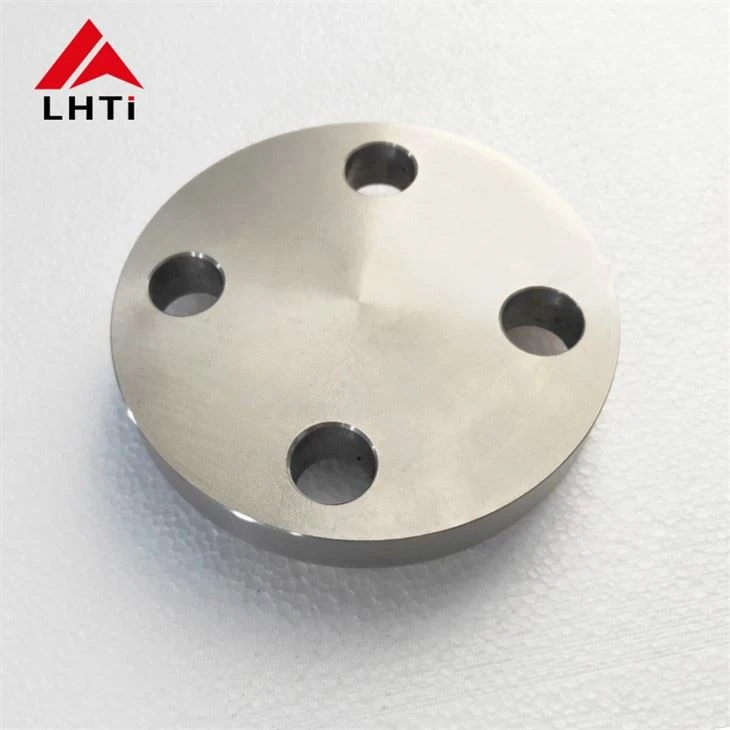
Our team of experts has extensive experience in the titanium industry and can provide professional advice and support to our customers. Whether you need a standard flange or a custom-designed one, we can meet your requirements.
If you are looking for high-quality titanium flanges, don't hesitate to contact us for procurement and negotiation. We are confident that our products will meet your expectations and provide you with long-term value.
References
- ASTM International. (n.d.). ASTM standards for titanium and titanium alloys. Retrieved from ASTM website.
- ANSI. (n.d.). ANSI B16.5 standard for pipe flanges and flanged fittings. Retrieved from ANSI website.