

Hey there! As a supplier of Niobium Tube, I often get asked whether niobium tubes can be used in chemical processing. Well, let's dive right into this topic and explore the ins and outs of using niobium tubes in the chemical processing industry.
What is Niobium?
First off, let's talk a bit about niobium itself. Niobium is a chemical element with the symbol Nb and atomic number 41. It's a soft, grey, ductile transition metal, often found in the minerals pyrochlore and columbite. Niobium has some pretty amazing properties, like high melting point (around 2477 °C), good corrosion resistance, and excellent superconductivity at low temperatures. These properties make it a really interesting material for various applications, including chemical processing.
Corrosion Resistance
One of the most important factors in chemical processing is corrosion resistance. Chemicals can be pretty harsh, and if your equipment can't stand up to them, you're going to have some serious problems. That's where niobium tubes come in. Niobium forms a stable oxide layer on its surface when exposed to air, which acts as a protective barrier against corrosion. This oxide layer is tough and can resist a wide range of chemicals, including acids and alkalis.
For example, in the presence of hydrochloric acid, many metals would quickly start to corrode. But niobium tubes can handle it like a champ. They can maintain their integrity and performance even in highly acidic environments, which is a huge advantage in chemical processing plants where acids are commonly used.
High-Temperature Performance
Chemical processing often involves high temperatures. Whether it's a reaction that requires heat to proceed or a distillation process that needs to be carried out at elevated temperatures, your equipment has to be able to withstand the heat. Niobium has a high melting point, as I mentioned earlier, which means it can handle high temperatures without deforming or losing its properties.
This high-temperature stability is crucial in chemical processing. For instance, in some chemical reactions, the temperature can reach several hundred degrees Celsius. Using niobium tubes ensures that the equipment doesn't fail under these extreme conditions, allowing the chemical processes to run smoothly and efficiently.
Compatibility with Chemicals
Another important aspect is the compatibility of niobium tubes with different chemicals. Niobium is relatively inert, which means it doesn't react easily with most chemicals. This is a big plus in chemical processing because you don't want your equipment to contaminate the chemicals you're working with or vice versa.
In addition to acids and alkalis, niobium tubes are also compatible with many organic solvents. This makes them suitable for a wide range of chemical processes, from the production of pharmaceuticals to the manufacturing of plastics.
Applications in Chemical Processing
Now that we've talked about the properties of niobium tubes that make them suitable for chemical processing, let's take a look at some specific applications.
- Reaction Vessels: Niobium tubes can be used to construct reaction vessels in chemical plants. These vessels are where the chemical reactions take place, and they need to be able to withstand the harsh chemicals and high temperatures involved. Niobium tubes provide the necessary corrosion resistance and high-temperature stability, ensuring that the reaction vessels last a long time and operate safely.
- Heat Exchangers: Heat exchangers are used to transfer heat between two fluids in a chemical process. Niobium tubes can be used in heat exchangers because of their excellent heat transfer properties and corrosion resistance. They can efficiently transfer heat without being damaged by the chemicals in the fluids, improving the overall efficiency of the chemical process.
- Distillation Columns: Distillation is a common separation technique in chemical processing. Niobium tubes can be used in distillation columns to provide a stable and corrosion-resistant structure. They can withstand the high temperatures and corrosive chemicals present in the distillation process, ensuring that the separation is carried out effectively.
Challenges and Considerations
Of course, using niobium tubes in chemical processing isn't without its challenges. One of the main challenges is the cost. Niobium is a relatively rare metal, and the production of niobium tubes can be expensive. This means that using niobium tubes may not be cost-effective for all chemical processing applications.
Another consideration is the availability of niobium tubes. Since niobium is not as widely used as some other metals, finding a reliable supplier can be a bit of a challenge. That's where we come in! As a supplier of Niobium Tube, we have a good supply of high-quality niobium tubes and can meet your specific requirements.
Conclusion
So, can niobium tube be used in chemical processing? The answer is a resounding yes! Niobium tubes have excellent corrosion resistance, high-temperature performance, and compatibility with a wide range of chemicals, making them a great choice for many chemical processing applications.
If you're in the chemical processing industry and are looking for a reliable and high-performance material for your equipment, I highly recommend considering niobium tubes. We're here to help you with all your niobium tube needs. Whether you need a small quantity for a research project or a large order for a full-scale chemical plant, we can provide you with the right niobium tubes at a competitive price.
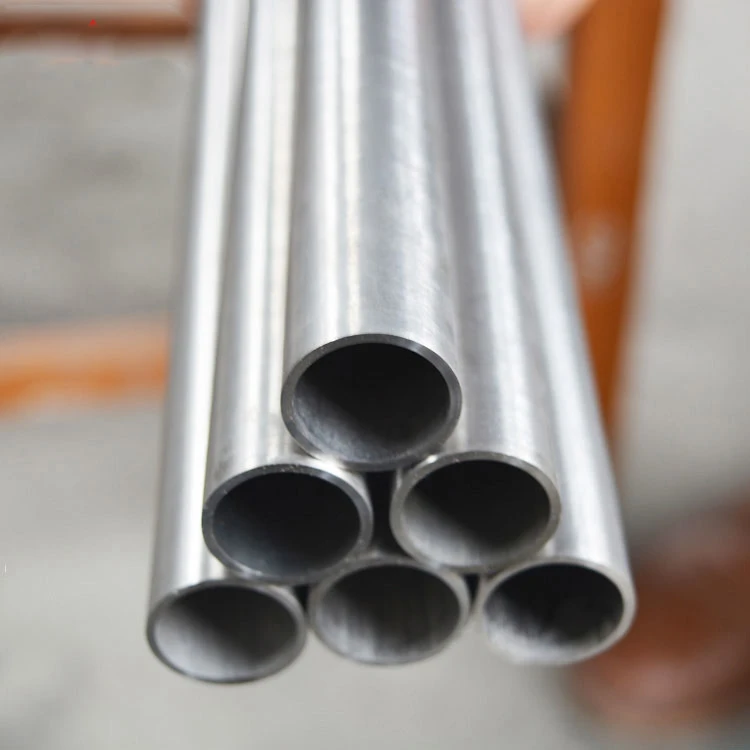
If you're interested in learning more about our Niobium Tube products or have any questions about using niobium tubes in your chemical processing applications, don't hesitate to get in touch. We'd love to have a chat with you and discuss how we can help you take your chemical processing to the next level.
References
- "Niobium: Properties, Production, and Applications" - A comprehensive book on niobium that covers its properties, production methods, and various applications.
- Journal articles on corrosion resistance and high-temperature performance of niobium in chemical environments.



