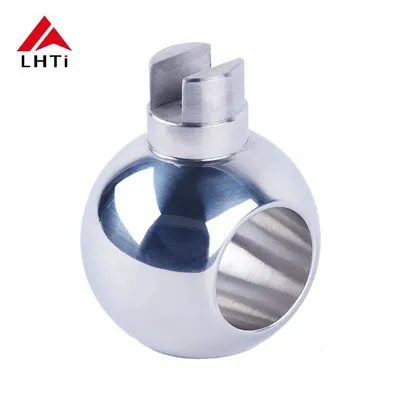
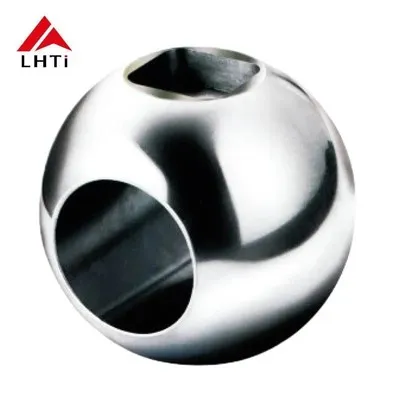
Titanium materials possess characteristics such as high strength-to-weight ratio, excellent resistance to seawater and marine atmospheric corrosion, non-magnetic properties, sound transparency, impact and vibration resistance, and good machinability, making them an ideal shipbuilding material. For marine materials, welding is a crucial manufacturing process for structural fabrication. The weldability and welding performance of various marine-grade titanium and titanium alloys directly determine their applicability in ship structures.
Titanium materials come in numerous varieties and grades, with varying performance requirements depending on their application fields. The primary functional requirements for marine titanium alloys include superior resistance to seawater and marine atmospheric corrosion, high specific strength, high toughness, and excellent processing properties. Given the extensive applications of titanium materials in the maritime sector-such as ship structures, propulsion systems, power systems, electronic information systems, auxiliary systems, and special equipment-a wide range of titanium alloy materials with diverse properties and specifications are required.
When welding marine titanium and titanium alloys, the principle of equal strength is generally followed to achieve an optimal balance of strength, plasticity, and toughness. Therefore, the following guidelines apply when selecting welding materials:
Homogeneous welding materials are typically preferred.
To improve joint plasticity, welding materials with slightly lower alloying content than the base metal may be used.
To enhance the plasticity of the weld metal, the interstitial element content in the welding wire should be lower than that in the base metal.
Based on years of research and regression analysis of experimental data on marine titanium alloy welding, achieving equal strength between the weld metal and the base metal generally requires the alloy composition of the welding wire to be one aluminum equivalent lower than that of the base metal. To ensure low levels of impurity elements in the weld metal after welding, the original impurity content in the welding wire must be strictly controlled. The reliability of welded joints in marine titanium alloys largely depends on the joint structure. For stress relief heat treatment of marine titanium alloy welded structures, the heat treatment process parameters should be determined according to the characteristics of different alloys to achieve optimal results.
Most marine titanium alloys exhibit excellent weldability. To obtain welded joints with superior comprehensive performance, it is essential to:
Design joint configurations correctly based on the characteristics of each alloy and the operational conditions of the structure.
Select welding materials appropriately.
Develop rational welding procedures.
Ensure effective and reliable gas protection in high-temperature welding zones.
Apply proper stress relief measures.