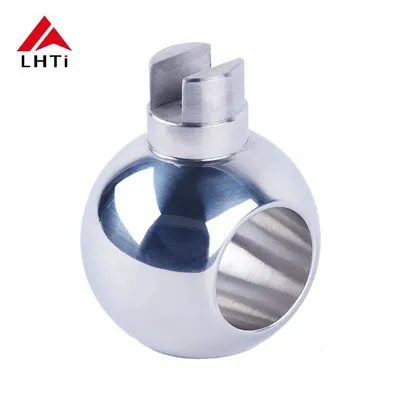
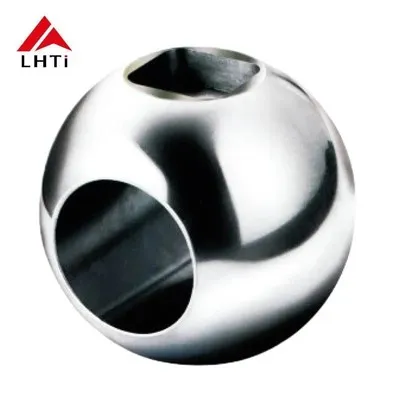
In the core areas of heavy chemical plants, every opening and closing of a valve directly impacts the smooth operation and safety of the production process. As Lihua Titanium Industry, a company deeply engaged in the application of specialized titanium materials for many years, we understand that in these extreme environments, the reliability of control components is the lifeline of production safety.
In PTA plants, hot acetic acid containing bromides flows through pipelines; in chlor-alkali workshops, 32% caustic soda solution continuously impacts every control node under conditions of 85°C and 2.5 MPa. These working conditions demand far more from valves than just "blocking flow" - they require "precise control" over these highly aggressive media. Lihua Titanium Industry, backed by in-depth research into material properties and corrosion mechanisms, transforms the potential of special metal materials into reliable safeguards in engineering practice.
PART.01 Severe Challenges – Multiple Tests on Control Nodes
- In heavy chemical applications, the triple challenges of corrosion, wear, and sealing often occur simultaneously for control valves, especially ball valves, forming a combined attack on traditional valves.
- Take the chlor-alkali industry as an example. Wet chlorine gas contains traces of hydrochloric acid vapor and chloride ions. Ordinary stainless steel valves can only operate for a few months before experiencing stem jamming and sealing failure. In PIA plants, the combination of high-temperature acetic acid and bromides causes general corrosion and localized pitting on most metal materials, increasing the surface roughness of the ball and rapidly degrading sealing performance.
- A 2023 equipment failure analysis from a large chemical group shows that valve failures account for 31% of unplanned plant shutdowns, with more than half of those failures caused by the material's inability to withstand media corrosion. Nearly 40% of these failures occurred in emergency shutoff valves, directly threatening the safety of the entire plant.
- In extreme working conditions, valves are no longer simple pipe accessories - they become critical safeguards for production safety. Choosing the wrong special material valve is like walking a tightrope on a high-voltage line. This is precisely why Lihua Titanium Industry continues to develop special material valves - to build strong and reliable defense lines.
PART.02 Technical Analysis – The Precision Approach of Special Material Ball Valves
- To meet the specific needs of heavy chemical applications, modern special material ball valves have achieved breakthroughs in three dimensions: material science, sealing technology, and structural design. Lihua Titanium Industry has established its own technical systems and process standards across these dimensions.
- The selection of core materials is the first technical hurdle for special material ball valves. Lihua Titanium Industry offers special material ball valves in several series based on media characteristics: For oxidizing acids such as nitric acid and chromic acid, industrial pure titanium (TA2) bodies and balls are used. For reducing acids like hydrochloric acid and dilute sulfuric acid, titanium-palladium alloy (TA9) or titanium-molybdenum-nickel alloy is selected.
- The innovation in sealing systems is key to the reliability of special material ball valves. Unlike traditional soft seals, Lihua has developed a composite sealing system combining metal hard seals and special polymers for high-temperature and high-pressure conditions. The titanium ball valve used in chlor-alkali plants features a ball coated with tungsten carbide and a flexible graphite spiral-wound gasket, ensuring micron-level sealing performance under frequent operation and temperature fluctuations.
- For pipelines carrying toxic or highly hazardous media, Lihua uses fully welded titanium ball valves to eliminate potential leakage points at flange connections. The valve stem is designed with a blowout-proof feature, ensuring that even under extreme pressure failure, the stem will not be ejected by the medium, providing the final safety barrier for the system.
PART.03 Lifecycle – Redefining the Value of Special Material Valves
In heavy chemical industries, valve evaluation can no longer rely solely on purchase cost - it requires a total lifecycle cost analysis. Although special material ball valves have a higher initial investment, they show significant advantages in extending operating cycles and reducing maintenance costs.
Take a DN200 shutoff valve handling wet chlorine gas as an example. A traditional lined valve needs to be replaced 1.5 times per year. After adding downtime losses and labor costs, the total cost over three years exceeds a large amount. In contrast, the titanium ball valve provided by Lihua Titanium Industry requires zero replacement over three years, saving 45% of the total cost compared to the traditional valve.
The reliability and safety offered by special material ball valves are difficult to quantify in monetary terms. In chemical production, a single valve failure can lead to media leakage, production interruption, or even safety accidents - the potential risks often cost dozens or even hundreds of times the valve's own value.
In Lihua Titanium Industry's technical vision, every special material ball valve is not just an independent industrial product, but a critical control node in the customer's production system - a guardian of safety and efficiency. Committed to converting the potential of special materials into tangible competitiveness and a sense of security for customers, this is Lihua Titanium Industry's unchanging technical belief and value promise. From material R&D to forming and processing, from performance testing to working condition verification, Lihua has built a complete technical service system - all to ensure that in the most demanding environments, control remains precise and safety remains online.