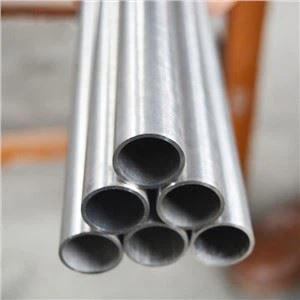
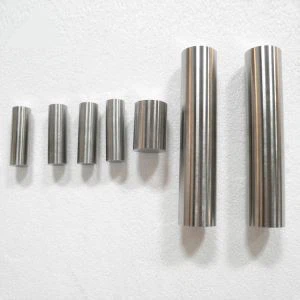
As a supplier of Tantalum Tubes, I've received numerous inquiries regarding the most suitable welding methods for these specialized tubes. Tantalum is a highly valuable metal known for its exceptional corrosion resistance, high melting point, and excellent ductility, making it a prime choice for various industrial applications, especially in chemical processing, electronics, and aerospace industries. However, welding tantalum tubes requires careful consideration due to the metal's unique properties. In this blog, I'll delve into the welding methods that are best suited for tantalum tubes, providing insights based on my experience in the industry.
Understanding Tantalum's Welding Challenges
Before we explore the welding methods, it's crucial to understand the challenges associated with welding tantalum. Tantalum has a high affinity for oxygen, nitrogen, and hydrogen at elevated temperatures. When exposed to these elements during welding, it can form brittle compounds that significantly reduce the mechanical properties of the weld. Additionally, tantalum has a high thermal conductivity, which means it dissipates heat rapidly, making it difficult to maintain the necessary heat for proper fusion. These factors necessitate the use of specific welding techniques and strict control of the welding environment.
Tungsten Inert Gas (TIG) Welding
Tungsten Inert Gas (TIG) welding, also known as Gas Tungsten Arc Welding (GTAW), is one of the most commonly used methods for welding tantalum tubes. This process involves using a non-consumable tungsten electrode to create an arc that melts the base metal and a filler metal, if required. The weld area is shielded from the atmosphere by an inert gas, typically argon, to prevent oxidation and contamination.
One of the main advantages of TIG welding is its precise control over the heat input and the welding process. This allows for the creation of high-quality, clean welds with minimal distortion. The use of an inert gas shield effectively protects the molten metal from reacting with atmospheric gases, ensuring the integrity of the weld. TIG welding is suitable for both thin and thick tantalum tubes, and it can be used for both manual and automated welding applications.
However, TIG welding has some limitations. It is a relatively slow process, which can increase the production time and cost. Additionally, it requires a high level of skill and expertise to achieve consistent results, especially when welding complex geometries or thin-walled tubes.
Electron Beam Welding (EBW)
Electron Beam Welding (EBW) is a high-energy welding process that uses a focused beam of electrons to melt the base metal. The process is carried out in a vacuum chamber to eliminate the presence of atmospheric gases and prevent contamination. EBW offers several advantages for welding tantalum tubes.
The high energy density of the electron beam allows for deep penetration welding with minimal heat-affected zones. This results in strong, high-quality welds with excellent mechanical properties. EBW is also a very precise process, capable of welding small and intricate parts with high accuracy. The vacuum environment ensures that the weld is free from oxidation and contamination, making it ideal for applications where purity is critical.
However, EBW also has some drawbacks. The equipment required for electron beam welding is expensive, and the process requires a high level of technical expertise. Additionally, the vacuum chamber limits the size of the parts that can be welded, and the process is not suitable for large-scale production.
Laser Beam Welding (LBW)
Laser Beam Welding (LBW) is another advanced welding method that can be used for tantalum tubes. This process uses a high-powered laser beam to melt the base metal and create a weld. Like EBW, LBW offers high energy density and precise control over the welding process.
One of the main advantages of LBW is its speed. Laser welding can be much faster than TIG welding, which can significantly reduce production time and cost. The focused laser beam also allows for minimal heat input, resulting in less distortion and a smaller heat-affected zone. LBW can be used for both thin and thick tantalum tubes, and it is suitable for a wide range of applications, including precision welding in the electronics industry.
However, LBW also has some limitations. The initial investment in laser welding equipment is high, and the process requires careful control of the laser parameters to achieve optimal results. Additionally, the quality of the weld can be affected by factors such as the surface finish of the base metal and the presence of contaminants.
Resistance Welding
Resistance Welding is a group of welding processes that use the heat generated by the resistance to electric current flow to melt the base metal. The most common types of resistance welding used for tantalum tubes are spot welding and seam welding.
Spot welding involves applying pressure and an electric current to two overlapping pieces of metal to create a series of weld spots. Seam welding is similar to spot welding, but instead of creating individual spots, a continuous weld seam is formed. Resistance welding is a fast and efficient process that can be easily automated, making it suitable for high-volume production.


However, resistance welding has some limitations when it comes to welding tantalum tubes. The high thermal conductivity of tantalum can make it difficult to achieve sufficient heat generation, especially for thick-walled tubes. Additionally, the process requires careful control of the welding parameters to prevent overheating and distortion.
Choosing the Right Welding Method
The choice of welding method for tantalum tubes depends on several factors, including the thickness of the tube, the complexity of the weld joint, the required weld quality, and the production volume. For thin-walled tubes and precision welding applications, TIG welding, EBW, or LBW may be the best options. These methods offer precise control over the heat input and the welding process, resulting in high-quality welds with minimal distortion.
For high-volume production of simple weld joints, resistance welding may be a more cost-effective option. However, it is important to ensure that the welding parameters are carefully optimized to achieve the desired weld quality.
In addition to the welding method, it is also crucial to pay attention to the pre-welding and post-welding processes. Proper cleaning and preparation of the base metal can help to prevent contamination and ensure a high-quality weld. Post-welding heat treatment may also be required to relieve stress and improve the mechanical properties of the weld.
Conclusion
In conclusion, there are several welding methods suitable for tantalum tubes, each with its own advantages and limitations. As a Tantalum Tube supplier, I understand the importance of providing high-quality products and ensuring that our customers have the information they need to make the right choices for their welding applications. Whether you choose TIG welding, EBW, LBW, or resistance welding, it is essential to work with experienced welders who have a thorough understanding of the properties of tantalum and the requirements of the welding process.
If you are interested in purchasing Tantalum Tubes or have any questions about the welding methods for these tubes, please feel free to contact us. We are committed to providing you with the best products and services to meet your needs. For more information about our Tantalum Tubes, you can visit our websites: Tantalum Tubes and Tantalum Tubes.
References
- "Welding of Tantalum and Tantalum Alloys," ASM International Handbook Committee, ASM International, 1996.
- "Advanced Welding Processes for High-Performance Metals," John C. Lippold, CRC Press, 2018.
- "Tantalum: Properties, Processing, and Applications," J. F. Stubbins, Elsevier, 2003.